
Empowering Environmental Activism with Interactive Touch Screen Technology
In an effort to visualize social impact and spur environmental activism, we developed an interactive touch screen kiosk for visitors at The Butterfly Pavilion to pledge everyday actions to protect the environment.
MOST Programming helped make a lasting social impact through the development of an interactive touch screen kiosk. Colorado Backyard, a new exhibition at the Butterfly Pavilion, opened to teach kids and adults about human impact on the environment and leveraged the MOST Programming team to help.
Teaching Environmental Responsibility to Kids
The client's goal was to engage and educate exhibit attendees by capturing their social impact and instilling a sense of environmental responsibility. The idea of an interactive kiosk was born, and execution began on a tight timeline and during one of the biggest blizzards in recent Denver memory.
THE CHALLENGE
Developed Custom Interactive Exhibit for Kids
MOST Programming developed a custom interactive exhibit allowing visitors to pledge everyday actions to protect the environment via a touch screen kiosk, which was delivered, tested and operationally deployed onsite and on time despite the short timeline and blizzard conditions. The kiosk provided a number of pledge options, including:
- Plant native flowers, grasses, and other plants, and protect my backyard from the harm of invasive plants and animals
- Purchase food items produced locally and sustainably
- Cut out wasteful water practices
- Reduce my carbon footprint
- Help clean up wetlands
- Use environmentally safe gardening products
- Stop using plastic bag, bottles, and straws
The kiosk was demonstrated by Butterfly Pavilion exhibit director Ken Hoke and was then opened up to exhibit visitors to sign up for conservation and education programs. “Always the educator, Ken Hoke, exhibits director at the Butterfly Pavilion, demonstrated a touch-screen display that lets visitors sign up for conservation and education programs (which the pavilion will then email you about). Hoke said there are small but impactful actions we can take every day that “will ensure these hidden heroes are protected for the future.”
(The Denver Post: By John Wenzel, March 21, 2019)
THE SOLUTION
Implemented Engaging Environmental Pledges Kiosk
The exhibit was an overwhelming success and effectively demonstrated how small actions can make a large impact. Visitors continue to enact their social and environmental pledges through the kiosk today.
THE RESULT

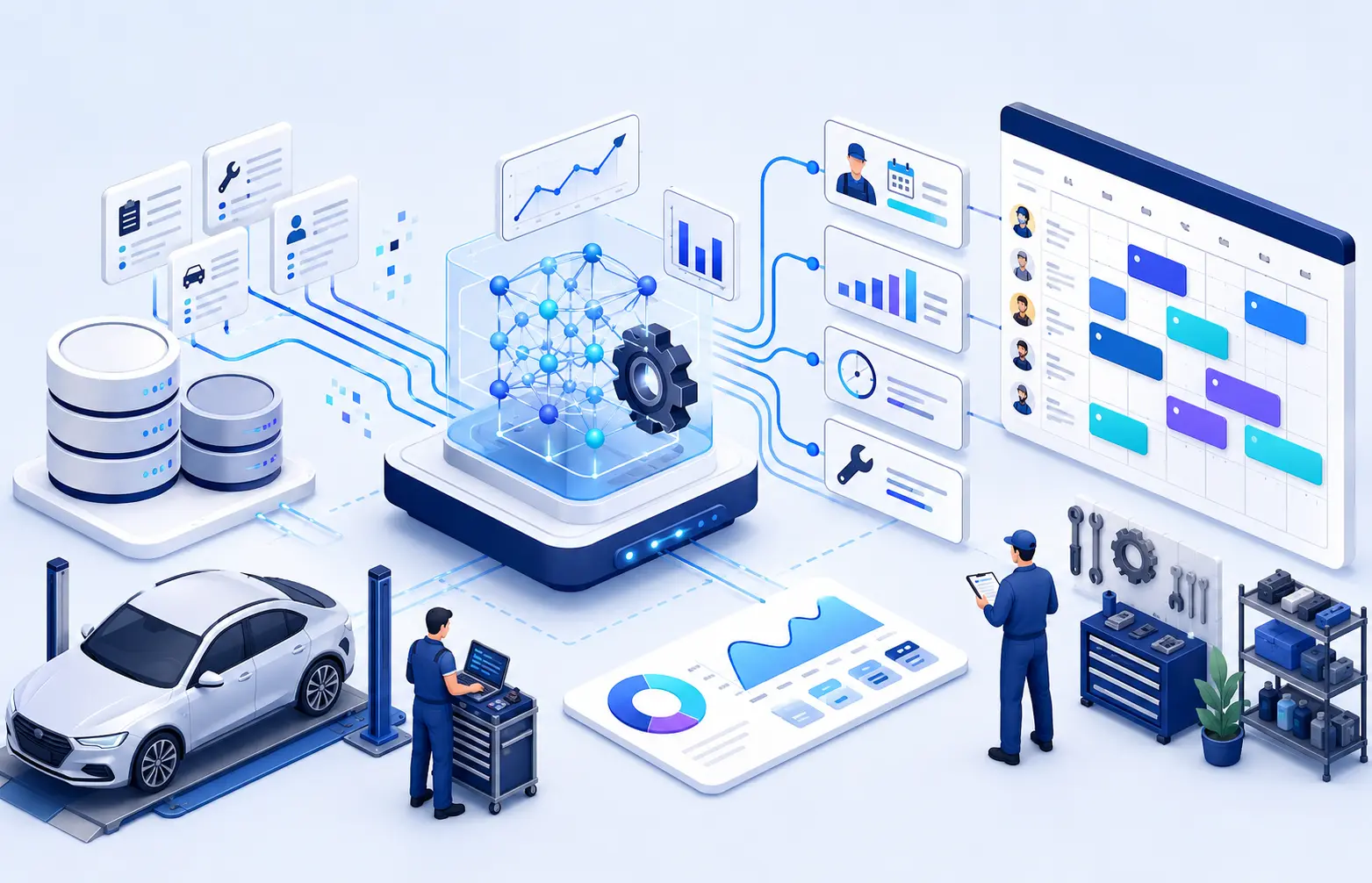

Non Profit Custom Software Solutions: Comprehensive Guide for Organizations
Introduction to Non-Profit software Solutions
Non profit custom software solutions are tailored technology applications built specifically to address the unique operational workflows, mission requirements, and scalability needs of mission-driven organizations. Unlike off-the-shelf platforms that force nonprofits to adapt their processes to pre-designed systems, custom software is engineered to align with how an organization actually operates and wants to operate.
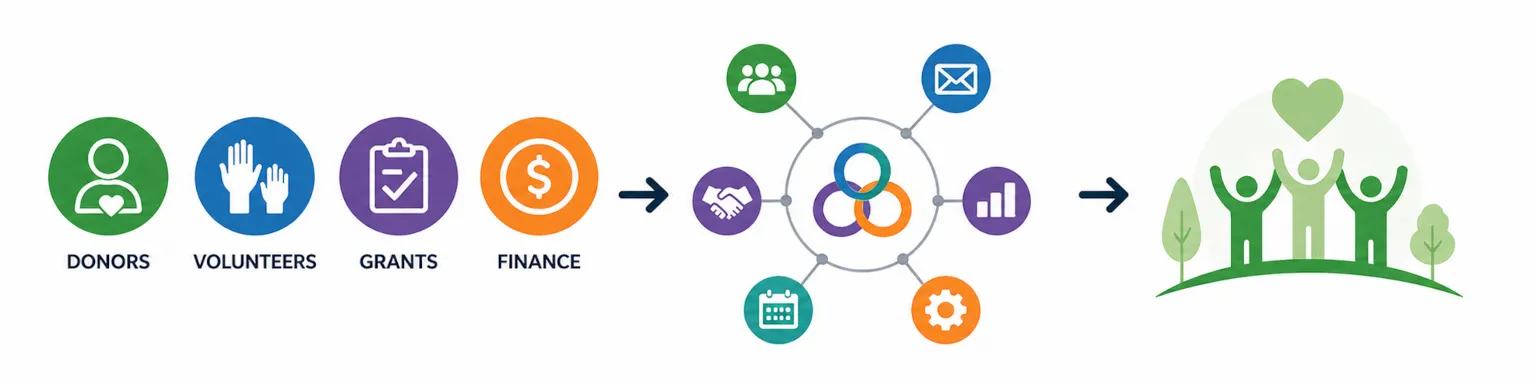
This guide covers the full spectrum of custom software solutions for nonprofits, including donor management systems, financial analytics platforms, volunteer coordination tools, and grant tracking solutions. The content is designed for nonprofit executives, IT managers, and development directors seeking technology modernization strategies that maximize impact per dollar spent.
Direct answer: Custom software solutions are tailored applications that address specific nonprofit operational needs, typically involving donor management, financial reporting, data analytics, and process automation, providing organizations with technology that evolves alongside their mission rather than constraining growth.
By reading this guide, you will gain:
- Clear understanding of different solution types and their applications
- Implementation strategies tailored to nonprofit budgets and timelines
- Cost considerations and long-term ROI frameworks
- Vendor selection criteria for choosing development partners
- Measurable impact metrics to justify technology investments
Understanding Custom Software Solutions for Nonprofits
Custom software for nonprofits refers to technology solutions specifically built or tailored to address the unique operational requirements that distinguish mission-driven organizations from for-profit enterprises. These requirements include donor relationship management intertwined with program delivery, complex grant cycles, volunteer management, compliance obligations tied to funding sources, and the constant pressure to maximize impact.
The misconception that custom software is exclusively expensive or reserved for large organizations represents a significant barrier to adoption. In reality, custom software can be a game changer for nonprofits by radically improving efficiency and impact. Many nonprofits discover that custom solutions actually reduce long-term costs by eliminating inefficiencies, consolidating multiple third-party software subscriptions, and preventing data errors that could jeopardize fundraising efforts.
Donor Management and CRM Systems
A custom donor management platform enables organizations to track donor interactions, segment outreach efforts, and create personalized communications that drive stronger donor relationships and recurring donations. Unlike generic CRM systems, nonprofit-specific solutions accommodate the nuances of gift processing, pledge tracking, and the cultivation cycle that moves prospects from awareness to major giving.
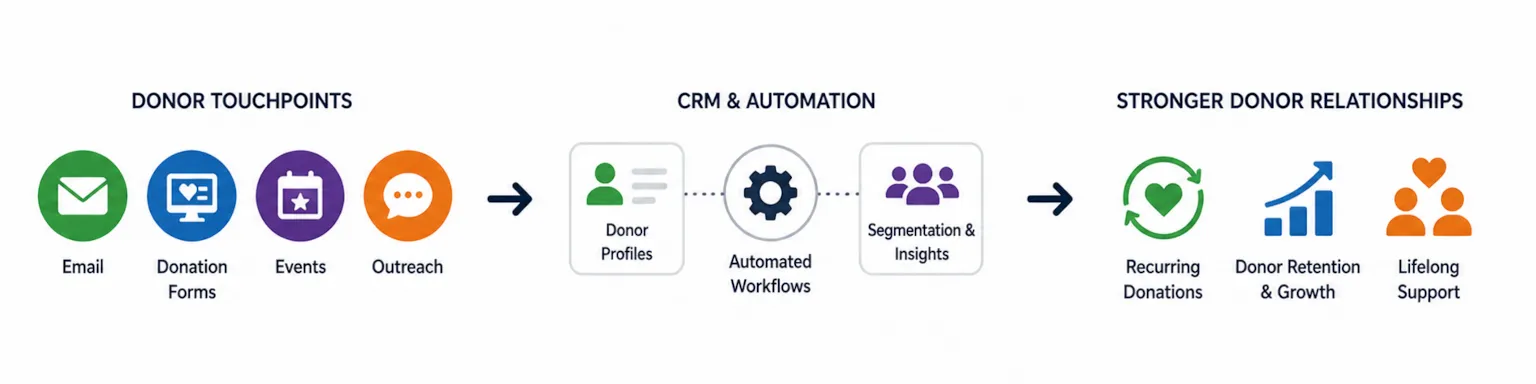
Integration capabilities with existing databases and legacy systems ensure that donor information flows seamlessly across the organization. This connectivity eliminates duplicate data entry and provides what experts describe as a “360-degree view” of constituent relationships, essential for effective donor engagement strategies.
Custom donation software also handles automated donation processing and tax receipt generation, streamlining operations that would otherwise consume significant staff time during peak fundraising campaigns.
Financial Analytics and Reporting Platforms
Nonprofits have fundamentally different accounting requirements compared to for-profit enterprises, including fund segregation, restricted versus unrestricted assets, and compliance reporting tied to specific grants. Custom financial management tools address these specialized needs through dashboards built on platforms like Power BI and cloud analytics solutions.
Real-time budget tracking and grant compliance monitoring enable organizations to quickly identify potential issues before they affect funding relationships. These financial reporting capabilities integrate directly with donor management systems, creating unified data architecture that supports both operational efficiency and strategic decision-making.
The relationship between donor data and financial analytics becomes particularly valuable when organizations need to demonstrate impact to funders and other stakeholders through automated reports and compliance documentation.
Operational Management Systems
Beyond fundraising software, custom solutions address the broader operational ecosystem that supports nonprofit missions. Volunteer management platforms handle applications, scheduling, and impact measurement, critical functions for organizations that rely heavily on volunteer labor.
Grant applications require specialized tracking systems that manage complex deadlines, document requirements, and reporting obligations across multiple funding sources. Event management tools coordinate attendee registration, speaker scheduling, venue logistics, and payment processing through a single platform.
These operational systems connect directly to donor and financial platforms, ensuring that every interaction, whether with donors, volunteers, or event participants, contributes to a comprehensive organizational database.
Core Technology Solutions and Applications
Building on foundational concepts, the technical implementation of custom nonprofit software requires careful attention to data architecture, automation capabilities, and infrastructure decisions that support long-term organizational growth.
Data Integration and Analytics
Multi-source data aggregation brings together information from donation platforms, volunteer systems, financial records, and program databases into unified analytics environments. This consolidation eliminates the fragmented technology ecosystems that characterize many nonprofits—where duplicate data entry, outdated databases, and manual processes consume significant staff time.
Predictive analytics for donor behavior use machine learning algorithms to analyze historical giving patterns and forecast future contributions. Organizations can target top prospects strategically, identify new fundraising opportunities, and maximize returns from fundraising campaigns. These AI-driven capabilities represent a significant evolution beyond basic software, embedding intelligence that would be prohibitively expensive for nonprofits to develop independently.
Power BI dashboard development provides executive teams with real-time visibility into mission-critical metrics, from donation tracking to program outcomes to volunteer engagement rates.
Process Automation and Workflow Optimization
Fundraising automation transforms repetitive tasks that previously required manual intervention. Automated donor communication sequences trigger thank-you letters immediately after online donations, nurture campaigns for lapsed donors, and personalized outreach based on giving history and interests. These automated workflows ensure every donor receives the right message at the right time without straining staff resources.
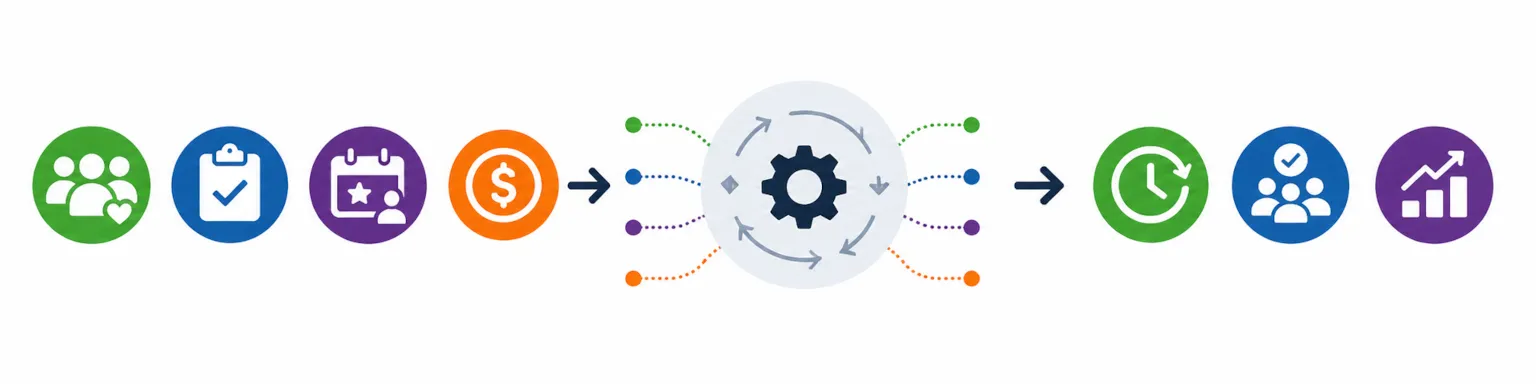
Grant application workflow automation tracks due dates, routes documents for approval, and generates compliance reports automatically. Integration with existing accounting and volunteer management systems ensures that information flows smoothly across functional areas.
Process automation directly addresses the reality that many nonprofits operate with limited staff resources. By eliminating repetitive tasks, organizations free their teams to focus on mission-critical activities that require human judgment and relationship building.
Cloud-Based Infrastructure and Mobile Access
Cloud analytics platforms enable remote team collaboration, ensuring that staff members remain on the same page regardless of location. This infrastructure supports the distributed work environments that have become standard across the nonprofit sector.
Mobile-responsive dashboards provide field staff and volunteers with access to critical information from any device. Whether coordinating in person events or managing remote programs, team partners can access real-time data without returning to central offices.
Security protocols and data protection measures safeguard sensitive donor information through role-based access controls, audit trails, and encryption. These protections ensure compliance with privacy regulations while maintaining the accessibility that enables effective operations.
Building a Strong Online Presence
A strong online presence is essential for nonprofits aiming to maximize their fundraising efforts, donor engagement, and outreach initiatives. Today’s donors expect seamless digital experiences, making it crucial for organizations to invest in user-friendly websites and active social media channels. By integrating custom software solutions, such as nonprofit software and fundraising software—nonprofits can streamline donation tracking, donor management, and financial reporting, all from a single platform.
Financial management tools and marketing tools play a pivotal role in boosting engagement and raising funds. These tools enable nonprofits to launch targeted outreach efforts, track the effectiveness of campaigns, and build stronger donor relationships through personalized communication. With the right software solutions in place, organizations can increase online donations, automate repetitive tasks, and ensure that every interaction supports their mission. Ultimately, a robust online presence powered by the best nonprofit software not only enhances visibility but also drives meaningful connections with supporters, helping nonprofits achieve their goals more efficiently.
Donation Forms and Online Giving
Donation forms and online giving platforms are at the heart of successful nonprofit fundraising campaigns. A user-friendly donation page makes it easy for donors to contribute, whether they’re making a one-time gift or setting up recurring donations. By leveraging donation software like bloomerang fundraising, nonprofits can create customized donation forms that reflect their brand and mission, while also tracking donor behavior to optimize future fundraising efforts.
Advanced donation software enables organizations to quickly identify top prospects through prospect research and donorsearch offers, allowing for more targeted and effective fundraising campaigns. Optimized donation forms not only improve the donor experience but also increase donor retention by making giving simple and secure. With features such as automated thank-you messages and easy-to-use interfaces, nonprofits can encourage more donations and build lasting relationships with their supporters. By focusing on the donor journey and utilizing the right tools, nonprofits can maximize the impact of every fundraising initiative.
Implementation Process and Solution Comparison
Strategic approach to nonprofit software implementation requires balancing organizational needs against budget constraints, staff capacity, and timeline requirements. The decision between custom development, off-the-shelf solutions, or hybrid approaches depends on specific organizational circumstances.
Development Methodology
Custom development becomes the appropriate choice when off-the-shelf platforms cannot accommodate unique workflows, when multiple disconnected systems create operational inefficiencies, or when compliance requirements demand specialized functionality.
- Needs assessment and stakeholder interviews establish priorities across departments and identify pain points that technology should address
- Data audit and legacy system evaluation document existing information assets and integration requirements
- Solution architecture and dashboard design translate business requirements into technical specifications
- Agile development with nonprofit-specific testing builds functionality iteratively with regular stakeholder feedback
- Staff training and change management prepare teams for new workflows through role-specific modules
- Go-live support and performance monitoring ensure smooth transition and ongoing optimization
Solution Type Comparison
| Criterion | Custom Development | Off-the-Shelf | Hybrid Approach |
|---|---|---|---|
| Initial Cost | Higher upfront investment | Lower entry point | Moderate investment |
| Long-term ROI | Strongest for complex needs | Limited scalability | Balanced returns |
| Customization Level | Complete flexibility | Constrained to features | Selective customization |
| Integration Capability | Built to specifications | Dependent on vendor APIs | Variable by component |
| Scalability | Grows with organization | May require platform changes | Modular expansion |
| Support Requirements | Ongoing partnership needed | Vendor-dependent | Split responsibility |
For smaller organizations with straightforward needs, affordable tools from established platforms may provide sufficient functionality. Larger organizations with multiple programs, complex funding streams, or distinctive operational models often find that custom solutions prove more cost-effective over their lifecycle despite higher initial investment.
Measuring Success and Evaluating Impact
For nonprofits, measuring success and evaluating impact are vital to ensuring that resources are used effectively and the mission is advanced. Software solutions, including productivity software and automated workflows, empower organizations to track key performance metrics, assign tasks, and streamline repetitive tasks. Tools like Google Workspace and Constant Contact help teams stay on the same page, ensuring that everyone is informed and aligned with organizational goals.
Automated reports provide real-time insights into program outcomes, fundraising progress, and operational efficiency, enabling data-driven decision-making. By saving time on manual processes, nonprofits can focus more energy on their mission and less on administrative work. Collaboration tools such as Google Meet and Google Drive further enhance teamwork by allowing team partners to share resources, access important documents, and coordinate efforts seamlessly. Leveraging these tools not only increases efficiency but also helps nonprofits demonstrate their impact to donors and stakeholders.
Common Challenges and Solutions
Nonprofit technology implementations face distinct obstacles that require strategies tailored to mission-driven organizations operating with limited resources. Custom software and fintech solutions can help nonprofits raise funds by increasing fundraising capabilities, streamlining donation processes, and connecting more effectively with supporters to improve financial stability.
Limited Technology Budget and Resources
Phased implementation approaches start with highest-impact modules, often donor management and financial reporting, before expanding to additional functionality. This strategy distributes costs over multiple budget cycles while delivering immediate value. Grant funding strategies specifically targeting technology modernization can offset development costs, with many funders recognizing that operational efficiency investments amplify program impact.
Data Migration from Legacy Systems
Data cleansing and standardization procedures must occur before migration to ensure that new systems start with accurate, consistent information. Parallel system operation during transition periods allows staff to verify data integrity while maintaining operational continuity. Organizations should expect this phase to require significant attention but recognize that proper migration prevents downstream problems that could affect donor relationships and financial reporting.
Staff Resistance and Change Management
Comprehensive training programs with role-specific modules address the reality that different staff members interact with software in different ways. Champion identification and peer-to-peer learning approaches leverage internal expertise to support adoption. The key features and user friendly interface of custom solutions should be designed with end-user input to minimize resistance and boost engagement from the start.
Vendor Selection and Partnership Management
Due diligence checklists should evaluate vendors’ experience with mission-driven organizations, their understanding of nonprofit operational nuances, and their capacity for long-term partnership. Clear communication protocols and milestone-based project management protect organizations from scope creep and ensure accountability. Reference checks with similar nonprofits provide insight into real-world vendor performance beyond sales presentations.
Security and Compliance
Protecting donor information and ensuring compliance with industry standards are top priorities for nonprofits managing online donations and digital fundraising. Implementing robust features such as encryption and secure payment processing on donation forms and websites is essential to prevent unauthorized access and safeguard sensitive data. Nonprofits can take advantage of discounted rates on leading security tools designed specifically for their needs, ensuring high-level protection without straining budgets.
Utilizing secure payment methods, including debit cards, further reduces the risk of fraud and builds trust with donors. By prioritizing security and compliance, nonprofits not only protect their reputation but also provide peace of mind to supporters, encouraging more donations and long-term engagement. Investing in the right tools and protocols ensures that every online transaction is safe, compliant, and aligned with best practices for nonprofit organizations.
Maintenance and Updates
Regular maintenance and timely updates are crucial for nonprofits to keep their online presence, software solutions, and fundraising efforts running smoothly. By consistently updating websites, social media channels, and fundraising software, organizations can address technical issues, enhance user experience, and stay ahead of evolving digital trends. Leveraging additional resources such as grant applications and new fundraising opportunities can provide the support needed to fund these ongoing improvements.
Adopting a single platform for donor management and fundraising streamlines operations, making it easier to manage multiple tasks and stakeholders from one place. This approach not only saves time but also reduces costs and administrative burden, allowing staff to focus on advancing the organization’s mission. By prioritizing maintenance and updates, nonprofits ensure that their technology remains effective, secure, and ready to support their goals well into the future.
Conclusion and Next Steps
Custom software solutions enable nonprofits to maximize donor engagement, streamline operations, and demonstrate measurable impact through data-driven insights. The best nonprofit software aligns with organizational workflows rather than forcing mission-driven teams to adapt to technology constraints. Whether addressing fundraising pages, managing online fundraising campaigns, or building robust features for volunteer coordination, custom solutions provide flexibility that off-the-shelf platforms cannot match.
Immediate actionable steps:
- Conduct internal needs assessment documenting current pain points and inefficiencies
- Identify key stakeholders across departments who should participate in requirements gathering
- Research potential development partners with demonstrated nonprofit sector expertise
- Develop preliminary budget estimates including implementation, training, and ongoing support costs
- Create timeline expectations aligned with organizational capacity and funding cycles
Related topics worth exploring include data governance strategies that protect donor information, cybersecurity protocols appropriate for nonprofit budgets, and ongoing system maintenance planning that ensures long-term solution viability. Organizations using tools like Google Workspace, Constant Contact, or productivity software like Google Drive and Google Meet should also evaluate how custom solutions will integrate with existing technology investments.
FAQs Related to Software for Nonprofits
What is custom software for nonprofits?
Custom software for nonprofits is a technology solution specifically designed to meet the unique operational needs of a mission-driven organization. Unlike generic software, custom solutions are tailored to a nonprofit's specific workflows, such as donor management, grant tracking, and volunteer coordination. This approach ensures that the technology enhances the organization's ability to achieve its mission, which is a core principle of our custom software development services.
How can a custom donor management system benefit a nonprofit?
A custom donor management system, or CRM, can significantly benefit a nonprofit by providing a centralized platform to track all donor interactions, manage fundraising campaigns, and automate communications. This allows for more personalized engagement with supporters, which can lead to increased donations and long-term loyalty. A custom CRM can be built to integrate seamlessly with your existing financial systems, a process we specialize in with our Data Management and Optimization services.
What are the advantages of custom financial analytics for nonprofits?
Custom financial analytics for nonprofits provide clear insights into an organization's financial health, allowing for better budgeting and resource allocation. With custom dashboards, you can track key metrics like donation trends, campaign ROI, and grant utilization in real-time. This data-driven approach, a hallmark of our Data Visualization services, empowers nonprofits to make more informed strategic decisions.
How can technology help with volunteer and grant management?
Technology can streamline both volunteer and grant management for nonprofits. A custom volunteer management system can automate the process of recruiting, scheduling, and communicating with volunteers. Similarly, a grant management system can help you track application deadlines, reporting requirements, and budget allocation for multiple grants, ensuring that you stay in compliance and never miss an opportunity. The key to managing these disparate data sources is a well-defined Data Flow Architecture.
What is an interactive touch screen kiosk for nonprofits?
An interactive touch screen kiosk is a powerful tool for nonprofits to engage with the public and promote their mission in a physical space. As seen in our work with the Butterfly Pavilion, these kiosks can be used to educate visitors, encourage donations, and even allow people to make pledges to support your cause. This type of interactive experience can create a lasting impression and inspire real-world action.
How can custom software development help a nonprofit increase its impact?
Custom software development can help a nonprofit increase its impact by automating repetitive administrative tasks, freeing up staff to focus on mission-critical work. It can also provide the data and insights needed to optimize programs, improve fundraising efforts, and demonstrate the organization's effectiveness to stakeholders. Ultimately, custom software can be a force multiplier for a nonprofit's impact.
What is the process for developing custom software for a nonprofit?
The process for developing custom software for a nonprofit typically begins with a discovery phase to understand the organization's unique needs and challenges. This is followed by the design and development of a solution, with regular feedback and testing to ensure it meets the nonprofit's requirements. The final step is deployment and training to ensure that the staff can make the most of the new system.
How can nonprofits ensure the affordability of custom software solutions?
Nonprofits can ensure the affordability of custom software solutions by taking a phased approach to development, starting with a minimum viable product (MVP) that addresses the most critical needs first. They can also explore different funding models, such as grants specifically for technology upgrades. Working with a development partner that has experience with nonprofits can also help to find cost-effective solutions.
What are the key features to look for in nonprofit software?
When evaluating nonprofit software, key features to look for include a user-friendly interface, robust reporting and analytics capabilities, and the ability to integrate with other systems. For fundraising software, features like online donation processing and automated tax receipting are essential. The software should also be scalable to grow with your organization.
How can data visualization help a nonprofit tell its story?
Data visualization can help a nonprofit tell its story by transforming complex data into compelling visual narratives. For example, a map showing the geographic reach of your programs or a chart illustrating the growth in the number of people you serve can be much more impactful than a simple text-based report. This is especially powerful when communicating your impact to donors and the public, and can be enhanced with AI and Machine Learning to uncover deeper insights.
Related Pages at MOST
- About MOST Programming — Learn about our focus on impactful projects, including non-profit collaborations for social and environmental good.
- Our Technology Stack — See the interactive tools, databases, and cloud platforms we use for kiosks, dashboards, and engagement applications.
- AI & Machine Learning Solutions — Predictive and data-driven enhancements for non-profit engagement tools and impact measurement.
- Data Management Solutions — Expertise in handling pledge data, visitor tracking, and analytics for non-profit exhibits.
- Data Flow Architecture — Building real-time data pipelines for interactive non-profit experiences and reporting.
- Data Aggregation Solutions — Unifying multi-source data for non-profit impact visualization and program sign-ups.
- Cloud Data Applications — Developing interactive web/kiosk apps on the cloud for education and conservation initiatives.
Contact Our Team — Reach out for custom non-profit tech, interactive exhibits, analytics dashboards, or social impact project discussions.
Additional Resources
- TechSoup Digital Assessment Tool for Nonprofits — Free web-based questionnaire to document current systems, staff workflows, technology needs, and improvement priorities for nonprofits.
- NTEN Tech Accelerate Assessment — Free tool to evaluate nonprofit technology adoption, practices, policies, and maturity—ideal for quantifying efficiency gains, error reduction, and time savings from custom software investments.
- Nonprofit Risk Management Center - Pledge Management Resources — Guidance on pledge tracking, donor commitments, and compliance frameworks (adaptable for vendor evaluation scorecards and reference checks with peer organizations).
- 501 Commons Free Organizational Check-up — Self-assessment covering nonprofit systems, workflows, and priorities, with standards for evaluating tech partners and investments.