
Travel Industry Data Visualization & Analytics Solutions
For a travel industry organization struggling to consolidate and make sense of data from multiple sources, we developed an interactive web application to enable association members, nationwide, to view a wide range of travel data analytics and forecasts.
Consolidated data and provided customer-facing insights for a travel industry organization. A travel organization engaged MOST Programming to develop a web subscription service to deliver travel statistics and forecasts to association members nationwide.
Developed Interactive Tourism Data Visualization Platform
The interactive web-based tool that aggregates data from multiple sources into a visual map of key statistics. The platform was designed to display analytical trends and fluctuation for a number of factors, including the number of tourists and their expenditures by state or nationwide.
THE SOLUTION
Provided Valuable Tourism Economical Impact Insights
The interactive KPIs and dashboards successfully display current travel trends and provide insight for the client’s customers, enabling association members to understand the impact of travel on each state’s economy and its relationship to job creation.
THE RESULT


Travel Industry Analytics: A Complete Guide to Data-Driven Decision Making
Introduction
Travel industry analytics encompasses the systematic collection, processing, and interpretation of data generated across airlines, hotels, online travel platforms, and related services to drive smarter business decisions. Data analytics is used to enhance operational efficiency by identifying patterns and optimizing processes in sectors such as airlines and hotels, leading to cost savings and improved resource management. This discipline transforms raw data from bookings, customer interactions, and market signals into meaningful insights that directly impact profitability and service quality.
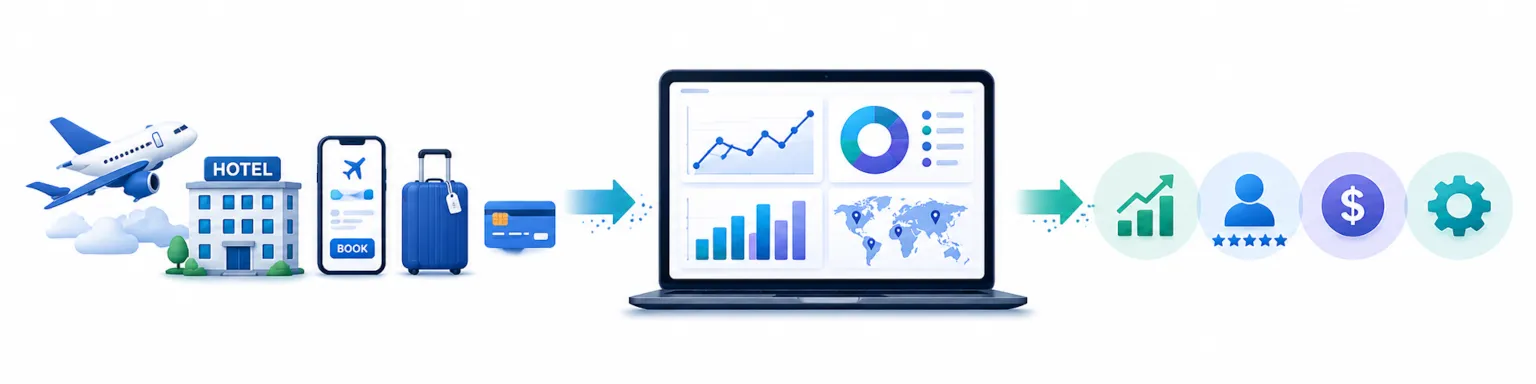
This guide covers the complete analytics landscape for travel businesses, from foundational concepts through implementation strategies. The scope includes airlines, hotels, travel agencies, tour operators, car rental companies, and online booking platforms. Content falls outside this guide if it addresses analytics for adjacent industries without travel-specific applications.
The target audience includes travel executives evaluating data strategy investments, data analysts building travel-specific models, revenue managers optimizing yield, and marketing professionals seeking customer insights for targeted marketing campaigns. Whether you manage corporate travel programs or operate a boutique tour company, leveraging data analytics has become essential for competitive advantage.
Direct answer: Travel industry analytics transforms booking data, customer behavior patterns, and operational metrics into actionable intelligence that enables dynamic pricing, personalized services, and enhanced operational efficiency—typically delivering revenue improvements of 3-7% when properly implemented.
By engaging with this content, you will:
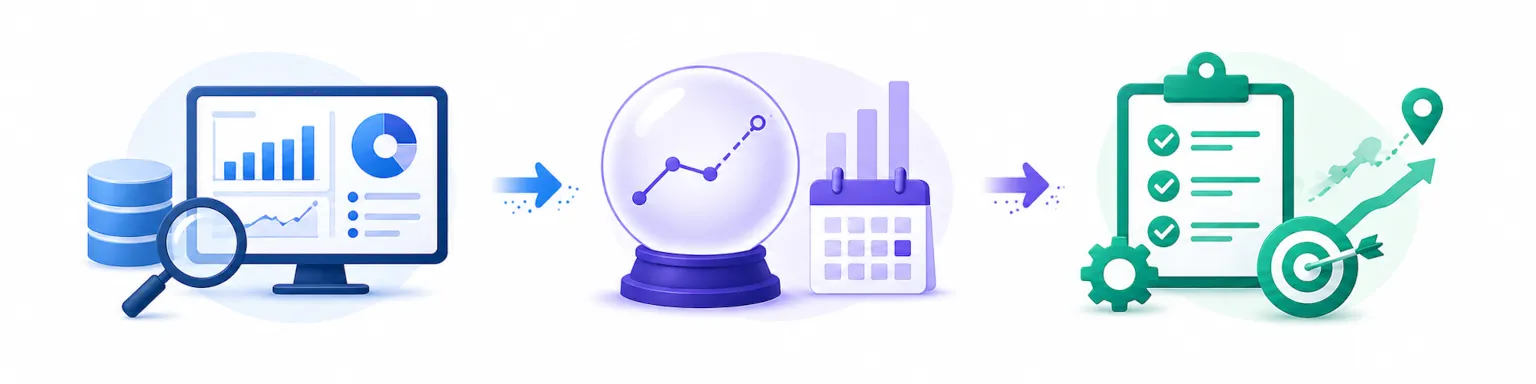
- Understand the three core analytics types (descriptive, predictive, prescriptive) and their travel applications
- Identify high-value use cases including revenue management and customer experience optimization
- Learn implementation strategies for integrating multiple systems and data sources
- Recognize common challenges like data silos and regulatory compliance, with practical solutions
- Establish measurement frameworks to quantify analytics ROI in travel businesses
Travel analytics delivers a wide array of benefits for organizations across the travel sector. Enhancing customer satisfaction is a key advantage, as data-driven personalization and customization allow travel companies to tailor services to individual preferences, improving client experience and loyalty. By leveraging analytics, businesses can optimize pricing, forecast demand, and streamline operations, resulting in increased profitability and a stronger competitive position.
If you're evaluating how analytics can improve pricing, forecasting, or customer experience in your travel organization, contact our team to discuss your goals.
Benefits of Travel Analytics
Travel analytics delivers cutting-edge capabilities that drive travel companies to dominate highly competitive markets. By harnessing data from multiple sources, travel businesses extract actionable insights into customer behavior, preferences, and emerging travel trends. This enables the creation of tailored services that boost customer satisfaction and strengthen loyalty bonds.
Leveraging data analytics significantly enhances operational efficiency and drives measurable results. By identifying patterns and bottlenecks within internal processes, travel companies streamline operations, slash costs, and optimize resource allocation with precision. Predictive analytics amplifies these advantages by enabling companies to forecast customer demand with remarkable accuracy, facilitating intelligent inventory management and dynamic pricing strategies that respond instantly to market fluctuations.
Travel analytics serves as a game-changer in developing high-impact marketing strategies. By understanding what drives customer decisions, travel companies craft targeted messaging and compelling offers, resulting in powerful marketing campaigns that deliver superior conversion rates. The ability to anticipate customer needs and preferences not only maximizes revenue but also establishes a sustainable competitive edge.
By embracing data analytics, travel companies make strategic decisions that drive revenue growth, enhance customer experiences, and position themselves as industry leaders in the travel and tourism landscape.
Understanding Travel Industry Analytics Fundamentals
Travel analytics refers to the systematic process of analyzing data from bookings, customer interactions, operational systems, and external data sources to inform decisions across the travel and tourism industry. Unlike generic business intelligence, travel data analytics must account for perishable inventory (unsold seats and room nights cannot be recovered), high fixed costs, volatile demand patterns, and the emotional nature of travel experiences.
The business case for analytics in the travel industry connects directly to core operational needs: revenue optimization through better pricing, customer satisfaction through personalization, operational efficiency through resource optimization, and risk management through early detection of disruptions and fraud.
Descriptive Analytics in Travel
Descriptive analytics answers the fundamental question “what happened” by summarizing historical data into digestible metrics and reports. In travel businesses, this includes analyzing booking data to understand occupancy rates, RevPAR (revenue per available room), load factors, average daily rates, customer lifetime value, and booking lead times.
For example, a hotel chain examining historical booking data might discover that weekend occupancy drops 23% during winter months, or that guests booking through direct channels spend 40% more on ancillary services than those booking through online travel agencies. Airlines track on-time performance, baggage handling metrics, and customer satisfaction scores through surveys and sentiment analysis of reviews.
Descriptive analytics provides the baseline understanding of travel business performance. Without accurate historical analysis, predictive models lack the foundation needed to forecast customer demand or identify data patterns that drive future decisions.
Predictive Analytics in Travel
Predictive analytics builds upon historical patterns to forecast future outcomes. Travel companies apply machine learning and statistical models to anticipate peak travel periods, predict cancellations and no-shows, forecast revenue by route or property, and estimate customer demand weeks or months ahead.
Demand forecasting represents the most established predictive application. Airlines and hotels use time-series models that incorporate seasonality, booking curves, market trends, weather data, and event calendars to forecast customer demand at granular levels—by specific flight, room type, or market segment. These predictions directly feed pricing and capacity decisions.
Beyond demand, predictive analytics enables customer behavior modeling. By analyzing factors such as browsing history, past purchases, and demographic data, travel and tourism companies can predict which customers are likely to upgrade, respond to promotions, or churn from loyalty programs. This intelligence shapes marketing strategies and retention efforts.
The relationship between descriptive and predictive analytics is sequential: descriptive analysis reveals patterns in structured and unstructured data, while predictive models use those patterns to generate forecasts that guide resource allocation and pricing.
Prescriptive Analytics in Travel
Prescriptive analytics moves from prediction to recommendation, answering “what should we do” through optimization algorithms, simulation, and increasingly, reinforcement learning. Where predictive analytics might forecast that demand for a particular flight will exceed capacity, prescriptive analytics recommends the optimal pricing structure and overbooking level to maximize revenue while minimizing customer inconvenience.
Examples include dynamic pricing engines that adjust prices in real time based on demand signals and competitor rates, recommendation systems that suggest destinations or ancillary services based on customer preferences, and crew scheduling optimizers that balance labor costs with service requirements.
Prescriptive analytics enables specific business applications and use cases that directly generate revenue and reduce costs, which the following section explores in detail.
Travel Data Collection
Effective travel analytics begins with robust data collection from diverse sources, delivering actionable insights that help you make informed, strategic decisions with greater confidence. You can gather data from booking systems, customer feedback, social media platforms, and various external sources to build a comprehensive view of your customers and operations. This cutting-edge approach captures both structured data, such as transaction records and demographic information, and unstructured insights, including reviews, social media posts, and open-ended survey responses that reveal real-world customer sentiments.
Collecting and integrating data from these multiple sources enables you to better understand customer preferences, travel history, and emerging market trends that drive competitive advantage. External data sources, such as weather reports, event calendars, and competitor pricing, further enrich your analysis and support more accurate forecasting and strategic decision-making. By harnessing these tailored data integration strategies, you can stay ahead in an increasingly competitive landscape.
To ensure the integrity and security of your customer data, you must implement strong data security measures and adhere to regulatory requirements like GDPR. This involves obtaining proper consent for data collection, safeguarding sensitive information, and maintaining transparency with customers about how their data is used. These comprehensive security practices not only protect your business but also build customer trust that translates into long-term competitive positioning.
You can leverage advanced tools and technologies, such as data warehouses, business intelligence platforms, and analytics software, to collect, store, and analyze vast amounts of travel data that address real-world challenges. By investing in comprehensive data collection strategies, your travel business can fuel analytics initiatives, enhance marketing strategies, and deliver more personalized and effective services that drive measurable results and operational excellence.
Key Applications and Use Cases
The analytics fundamentals described above power specific applications across travel operations. These use cases demonstrate how travel companies translate data driven insights into measurable business outcomes. Tracking flight bookings is a key input for demand forecasting, revenue management, and dynamic pricing.
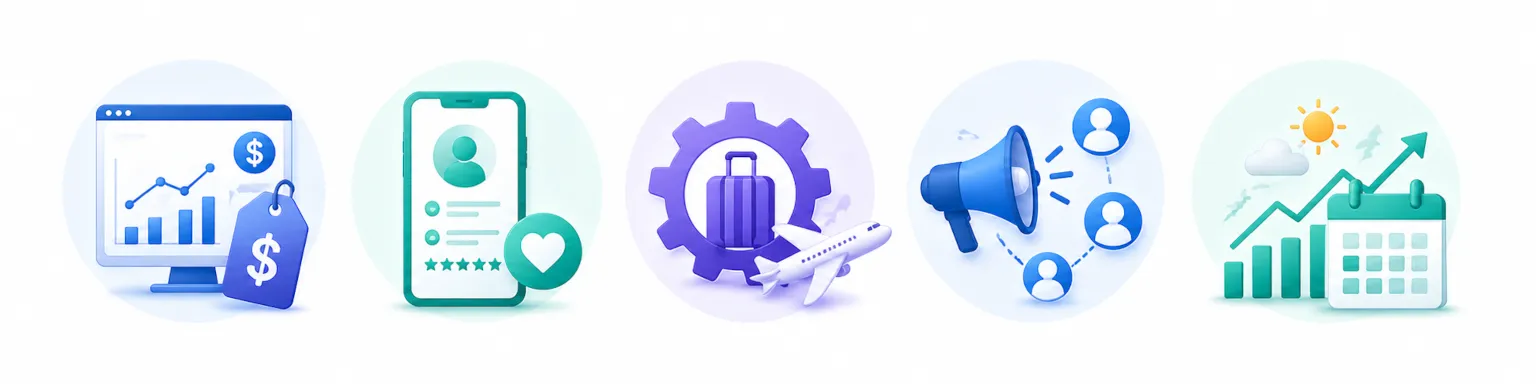
Data analytics can help determine optimal pricing strategies by analyzing factors such as historical sales data, competitor pricing, and market demand.
Revenue Management and Dynamic Pricing
Revenue management represents the most mature analytics application in travel, pioneered by airlines in the 1980s and now standard across hotels, car rental companies, and cruise lines. The core challenge involves selling perishable inventory (seats, rooms, vehicles) at optimized pricing that balances occupancy against yield.
Modern revenue management systems ingest real time data from booking systems, competitor pricing feeds, event calendars, and weather services. Machine learning models analyze demand elasticity by segment, forecast pickup pace, and recommend price points that maximize revenue. Airlines apply these techniques at the origin-destination and fare class level; hotels apply them by room type, rate plan, and length of stay.
Dynamic pricing engines now adjust prices multiple times daily, or even hourly during high-demand periods. A hotel might raise rates when a major conference is announced nearby, while an airline might lower prices on underperforming routes when booking pace falls below forecast. Integration with booking systems, global distribution systems, and online travel agencies ensures that optimized pricing reaches all channels simultaneously.
The revenue impact is substantial. Travel businesses implementing advanced analytics for pricing typically see revenue improvements of 3-7%, meaningful gains in an industry where net margins often run in low single digits.
Personalization and Customer Experience
Personalization transforms generic travel offerings into tailored experiences using customer data from transactions, browsing behavior, and loyalty programs. Airlines recommend preferred seats and ancillary services; hotels suggest room upgrades and on-property amenities; online platforms curate destination and activity recommendations based on past travel patterns. Data-driven personalization is key to enhancing customer satisfaction, as it allows travel companies to deliver services that closely match individual preferences, improving client experience and loyalty.
The personalization engine draws on multiple data sources: transaction data showing past purchases, behavioral data from website and app interactions, stated customer preferences from profiles and surveys, and inferred preferences from similar travelers. Recommendation algorithms, ranging from collaborative filtering to deep learning models, match travelers with relevant offers.
Beyond product recommendations, personalization extends to communication timing and channel. By analyzing data patterns in customer engagement, travel agencies and tour operators identify the optimal moment to send promotional emails, the message tone that resonates with specific segments, and the offers most likely to convert browsing into booking.
Sentiment analysis of reviews and social media interactions enables real-time service adjustments. Sentiment analysis of customer feedback helps travel companies improve service quality and enhance customer experience. If analysis reveals complaints about check-in delays at a specific property, operations teams can respond before negative sentiment spreads. This connection between customer insights and operational response drives customer loyalty and repeat bookings.
Operational Efficiency Optimization
Operational analytics applies predictive and prescriptive techniques to internal processes, reducing costs while maintaining or improving service quality. Analytics is used to enhance operational efficiency by identifying patterns and optimizing processes across sectors such as airlines and hotels. Airlines optimize crew scheduling, aircraft routing, and maintenance timing; hotels optimize housekeeping sequences, staffing levels, and inventory data for supplies; travel agencies optimize advisor assignments and workflow. Analytics also helps travel managers identify policy violations and negotiate better volume discounts with preferred vendors. Additionally, a corporate travel manager tracks spending, compliance, and vendor usage to control costs.
Demand forecasting powers staffing optimization. By predicting check-in volumes by hour, call center contacts by day, and restaurant covers by meal period, travel businesses align labor schedules with actual demand. This reduces both overtime costs and service bottlenecks during peak periods.
Predictive maintenance uses operational data from aircraft systems, hotel equipment, and fleet vehicles to anticipate failures before they cause disruptions. By analyzing factors like component age, usage patterns, and environmental conditions, maintenance teams can schedule repairs proactively rather than reactively, reducing downtime and improving reliability.
Route and network analytics guide strategic decisions for airlines and tour operators. Traffic data, demand forecasts, and competitive analysis inform decisions about which routes to expand, which to reduce, and what pricing and capacity to apply across the network. For travel and tourism companies focused on sustainability efforts, these same analytics can optimize routing and fleet utilization to reduce fuel consumption and environmental impact.
Marketing Strategies and Optimization
Travel analytics delivers actionable insights from complex customer data, helping you make informed, strategic marketing decisions with greater confidence. By analyzing customer behavior and preferences, you can design targeted campaigns that resonate with specific audience segments, driving higher engagement and conversion rates that translate directly into revenue growth.
Cutting-edge predictive analytics and machine learning enable you to forecast customer demand with precision, identify optimal promotion timing, and deliver personalized offers based on individual preferences and past behaviors. This intelligent approach allows you to make dynamic adjustments to your marketing strategies, whether you're optimizing pricing, managing inventory, or tailoring communications to maximize impact and stay ahead in the competitive travel market.
With access to real-time and historical customer data, you can continuously measure your marketing effectiveness, quickly identifying what drives results and what needs refinement. This iterative process ensures you optimize marketing spend, reduce operational costs, and harness the full potential of revenue opportunities across all customer touchpoints.
By leveraging travel analytics, you unlock the power to make data-driven decisions that enhance your marketing effectiveness, deliver more relevant offers to your customers, and ultimately achieve greater profitability and market share. Whether you're aiming to automate customer targeting, predict booking trends, or improve customer experiences, travel analytics enables you to stay ahead in an increasingly competitive travel and tourism landscape.
Implementation Strategy and Best Practices
Successful analytics implementation requires thoughtful planning around data infrastructure, tool selection, and organizational change. Building on the applications described above, this section provides practical guidance for travel businesses at various stages of analytics maturity.
Data Integration and Platform Setup
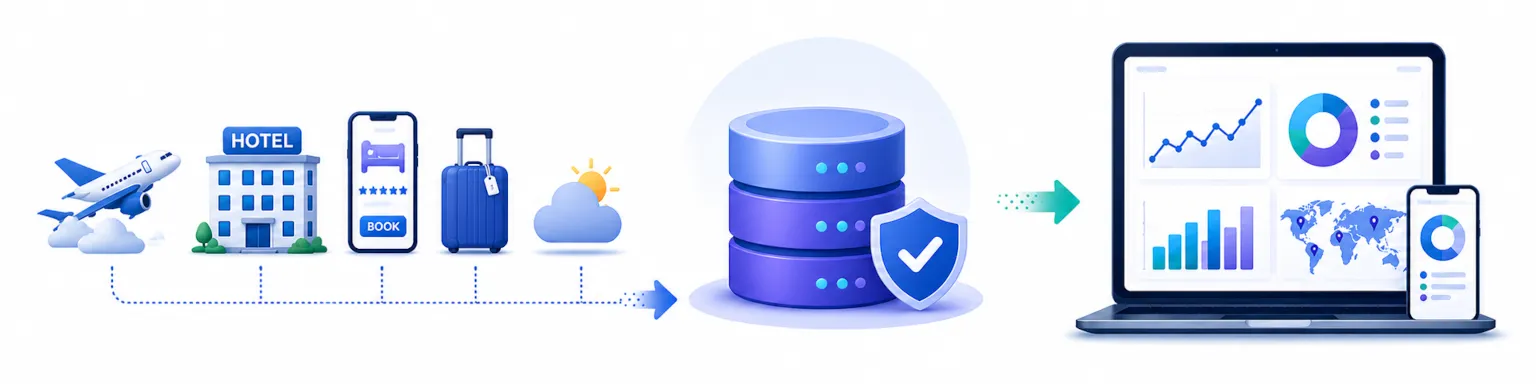
Most travel organizations face fragmented data environments where booking systems, CRM platforms, property management systems, and marketing tools operate independently. Implementation begins with creating a unified data foundation.
- Audit existing data sources by cataloging all internal systems generating travel data—reservations, PMS, POS, loyalty, contact center, web analytics—plus external data sources like market intelligence, weather, and events.
- Establish data integration architecture using APIs, ETL processes, and streaming pipelines to consolidate data from multiple systems into a central data warehouse or lake. Prioritize real time data feeds for time-sensitive applications like dynamic pricing.
- Implement data governance policies defining ownership, data quality standards, access controls, and retention policies. This foundation proves essential for both analytics accuracy and regulatory compliance with frameworks like GDPR.
- Deploy analytics tools appropriate to your use cases. BI platforms for descriptive reporting, data science environments for predictive modeling, and operational dashboards for real-time monitoring.
- Build the organizational capability by training existing staff, hiring specialized talent, and establishing processes for translating analytics outputs into informed decisions.
Analytics Tool Comparison
Travel businesses face a range of platform options depending on their scale, technical capabilities, and specific requirements.
| Platform Type | Strengths | Best For |
|---|---|---|
| Cloud-based BI (Tableau, Power BI, Looker) | Scalability, broad integration, self-service | Large travel companies with diverse data |
| Specialized Travel Analytics (IDeaS, Duetto, PROS) | Industry-specific models, revenue management focus | Airlines, hotels, car rental companies |
| Open-source Solutions (Python/R, Apache stack) | Customization, cost-effective, flexibility | Startups, agencies with technical teams |
| Customer Data Platforms (Segment, mParticle) | Unified customer view, real-time activation | Companies prioritizing personalization |
Selecting the right platform requires matching organizational capabilities with tool requirements. A mid-sized hotel chain might combine a specialized revenue management system with a cloud-based BI tool for broader analytics. A digital-first online travel agency might build on open-source foundations with custom machine learning pipelines.
The key is starting with clear use case priorities rather than acquiring technology before defining requirements. Many travel companies achieve significant value from straightforward reporting improvements before advancing to sophisticated big data analytics and machine learning applications.
Common Challenges and Solutions
Travel analytics implementations commonly encounter obstacles related to data infrastructure, technical requirements, and regulatory constraints. Addressing these challenges proactively improves success rates.
Data Silos and Integration Issues
Travel organizations typically operate with data silos where booking, customer, and operational data reside in disconnected systems with incompatible formats. This fragmentation prevents the unified view needed for meaningful insights and cross-functional analytics.
Solution: Implement a unified data platform with API connections between core systems. Start with high-value integration points, connecting reservation systems to CRM for example, before expanding scope. Establish data governance that standardizes field definitions, naming conventions, and data quality rules across departments. Create a data catalog documenting available datasets, refresh frequencies, and appropriate uses. For complex data environments, consider master data management approaches to reconcile customer records and eliminate duplicates.
Real-time Processing Requirements
Many valuable travel analytics applications—dynamic pricing, disruption response, personalization—require real time data processing rather than batch reporting. Legacy infrastructure often cannot support the speed required for these use cases.
Solution: Deploy streaming analytics platforms (Kafka, Apache Flink, cloud-native alternatives) to handle high-velocity data flows. Implement event-driven architectures that trigger analytics processes immediately when relevant events occur; a booking, a flight delay, a price change by competitors. For customer-facing applications, consider edge computing solutions that reduce latency. Prioritize real-time capability for use cases where timing directly impacts value; batch processing remains appropriate for strategic analytics and reporting.
Privacy and Compliance Concerns
Travel businesses handle extensive personal data, passport information, payment details, travel itineraries, customer preferences, creating substantial data security obligations and regulatory compliance requirements under GDPR, CCPA, and other frameworks.
Solution: Establish comprehensive data governance covering collection consent, storage limitations, access controls, and deletion processes. Implement data anonymization and pseudonymization for analytics use cases that don’t require individual identification. Deploy encryption for data at rest and in transit, with audit trails tracking access to sensitive customer data. Train teams on compliance requirements and create processes for responding to data subject requests. Consider privacy-enhancing technologies like differential privacy for analytics on sensitive datasets. Make privacy part of analytics design rather than an afterthought.
Conclusion and Next Steps
Travel industry analytics has evolved from a back-office reporting function to a core competitive capability. Organizations that effectively collect, integrate, and analyze travel data outperform peers in revenue optimization, customer experience, and operational efficiency. The combination of big data availability, advanced analytics techniques, and real-time processing has made data driven decisions accessible across the travel and tourism industry, from global airline alliances to independent travel agencies.
Success requires both technical infrastructure and organizational commitment. The most sophisticated algorithms cannot overcome poor data quality or resistance to data-driven decision making.
Immediate actionable steps:
- Assess current data infrastructure by cataloging existing systems, data flows, and integration gaps
- Identify one or two high-value use cases aligned with business priorities (revenue management and customer personalization offer fastest payback for most travel businesses)
- Pilot a focused analytics project with clear success metrics and business sponsorship
- Build organizational capability through training, hiring, and process changes that embed analytics into decision workflows
- Establish data governance foundations that support scaling analytics while maintaining data quality and regulatory compliance
If you're ready to explore how data analytics can support your travel business, contact our team to discuss your goals.
Related topics for further exploration: Advanced machine learning applications for travel demand forecasting, IoT integration for operational analytics and predictive maintenance, and emerging technologies addressing data security and cross-organization data sharing in travel ecosystems.
FAQs Related To Travel Analytics
What is travel analytics?
Travel analytics is the process of collecting, analyzing, and interpreting data from the travel and tourism industry to uncover trends, predict outcomes, and make data-driven decisions. It involves using sophisticated software and methodologies to transform raw data from bookings, flights, and hotels into actionable insights. Effective travel analytics can help businesses optimize pricing, improve customer experiences, and increase profitability.
How does travel analytics help in understanding travel trends?
Travel analytics helps in understanding travel trends by identifying patterns and correlations in large datasets. For example, by analyzing booking data, travel analytics can reveal emerging popular destinations, shifts in travel seasons, and changes in consumer spending habits. This allows tourism organizations and businesses to adapt their strategies to meet evolving market demands, a process that often involves creating interactive dashboards through our Data Visualization services.
What are the main benefits of using travel analytics?
The main benefits of using travel analytics include enhanced operational efficiency, improved marketing effectiveness, and a better understanding of customer behavior. By leveraging travel analytics, companies can optimize routes, manage inventory more effectively, and create highly targeted marketing campaigns. This leads to cost savings, increased revenue, and a significant competitive advantage in the marketplace.
What data sources are essential for effective travel analytics?
Effective travel analytics relies on a wide range of data sources, including airline booking data, hotel occupancy rates, online travel agency (OTA) statistics, website traffic, and customer reviews. Consolidating these disparate data sources into a single, unified view is a major challenge that requires robust Data Management and Optimization strategies to ensure the accuracy and reliability of the insights generated.
How is predictive modeling used in travel analytics?
Predictive modeling is a key component of advanced travel analytics, using historical data and machine learning algorithms to forecast future outcomes. For instance, it can be used to predict future demand for a particular destination, estimate hotel occupancy rates for an upcoming season, or identify customers who are likely to churn. These predictive insights, powered by our AI and Machine Learning solutions, enable businesses to be more proactive in their planning.
What is the role of an interactive web application in travel analytics?
An interactive web application serves as a powerful platform for delivering travel analytics insights to a wide audience. As demonstrated in our work for a national travel organization, such an application allows users to explore data visually, filter by different criteria (like state or region), and discover trends on their own. This self-service approach to travel analytics empowers stakeholders to get the specific information they need, when they need it, which is a key benefit of our custom software development.
How can travel analytics be used to measure the economic impact of tourism?
Travel analytics can be used to measure the economic impact of tourism by quantifying how travel spending flows through an economy. By analyzing data on visitor expenditures, tax revenues, and employment, travel analytics models can calculate the direct, indirect, and induced economic benefits of tourism. This is similar to the functionality of our Travel Expenditure Calculator, which provides concrete data for policymakers and industry advocates.
Who in the travel industry uses travel analytics?
Travel analytics is used by a wide range of professionals across the travel industry. This includes airlines for route planning and revenue management, hotels for pricing and occupancy forecasting, tourism boards for marketing and destination development, and online travel agencies for personalizing customer recommendations. Essentially, anyone whose business is impacted by travel trends can benefit from travel analytics.
How does a company get started with travel analytics?
A company can get started with travel analytics by first identifying the key business questions they want to answer. The next step is to assess their existing data sources and identify any gaps. From there, they can work with a data analytics partner to develop a strategy for collecting, integrating, and analyzing the data. This often involves building a scalable Data Flow Architecture to support their analytics needs.
What is the ROI of investing in a travel analytics platform?
The return on investment (ROI) from a travel analytics platform comes from several areas, including increased revenue through optimized pricing, cost savings from improved operational efficiency, and higher customer retention through personalized experiences. By providing a clearer understanding of the market and customer behavior, travel analytics enables more strategic decision-making that leads to measurable improvements in profitability and a stronger competitive position.
Additional Resources
Key Performance Indicators for Travel Analytics ROI:
- Revenue per available unit improvement (RevPAR, RASM, revenue per available seat-mile)
- Forecast accuracy (mean absolute percentage error on demand predictions)
- Conversion rate improvement from personalization
- Cost reduction from operational optimization
- Customer satisfaction score changes linked to analytics-driven improvements
Data Source Inventory Checklist:
- Internal: Reservation/PMS, CRM, loyalty program, website/app analytics, contact center, operational systems, financial systems
- External: Market intelligence (STR, OAG, ARC), weather services, event databases, macroeconomic indicators, social media platforms, competitor pricing
- Third-party: Credit card transaction data, mobile location data, review aggregation, flight status feeds
Vendor Evaluation Criteria:
- Travel industry domain expertise and customer references
- Integration capabilities with existing systems
- Real-time processing performance for dynamic pricing applications
- Data security certifications and compliance support
- Total cost of ownership including implementation and ongoing support
- Scalability to accommodate growth and future trends in travel analytics