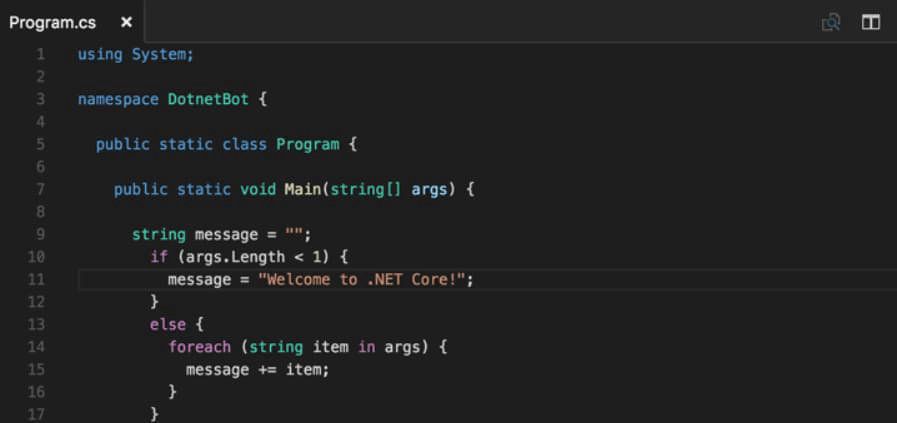
.NET is a convenient open-source platform that is used for apps and website development. The variety of advantages and compatibility with popular programming languages make .NET one of the most utilized environments for developing intuitive and user-friendly products.
Discover MoreThe .NET framework and its associated languages, particularly C#, are among the most widely used technologies for building modern applications. Developed by Microsoft, .NET provides a robust, scalable, and versatile platform for developing web, desktop, mobile, and cloud-based applications.

What is .NET?
.NET is a free, open-source, cross-platform framework developed by Microsoft for building and running applications. It provides a comprehensive programming model, runtime, and libraries that enable developers to create high-performance applications. The .NET ecosystem includes:
.NET Framework: The original implementation, primarily for Windows-based applications.
.NET Core: A cross-platform, high-performance framework for building modern applications.
.NET 5 and Later: A unified platform that combines the best of .NET Framework and .NET Core, with a focus on cross-platform development.
Key Features of .NET
Cross-Platform Support: .NET supports Windows, Linux, and macOS, enabling developers to build applications for multiple platforms.
High Performance: .NET is optimized for speed and efficiency, making it suitable for high-performance applications.
Open Source: The .NET platform is open source, with a large and active community contributing to its development.
Language Interoperability: .NET supports multiple programming languages, including C#, F#, and Visual Basic, allowing developers to choose the best language for their needs.
Rich Library Ecosystem: .NET provides a vast standard library and NuGet packages for extending functionality.
Security: .NET includes built-in security features, such as code access security and encryption, to protect applications.
Scalability: .NET applications can scale from small projects to enterprise-level systems.
Core Components of .NET
Common Language Runtime (CLR): The execution engine that manages memory, handles exceptions, and ensures security.
Base Class Library (BCL): A collection of reusable classes, interfaces, and value types that provide core functionality.
ASP.NET: A framework for building web applications and APIs.
Entity Framework: An object-relational mapper (ORM) for working with databases.
Xamarin: A framework for building cross-platform mobile applications.
MAUI (Multi-platform App UI): A modern framework for building native desktop and mobile applications with a single codebase.
Programming Languages in .NET
The .NET ecosystem supports multiple programming languages, with C# being the most popular. Here’s an overview of the primary languages:
1. C# (C-Sharp)
A modern, object-oriented programming language designed for building a wide range of applications.
Features include strong typing, LINQ (Language Integrated Query), and asynchronous programming.
Widely used for web development, desktop applications, and game development (via Unity).
2. F#
A functional-first programming language that also supports object-oriented and imperative programming.
Ideal for data science, machine learning, and financial applications.
3. Visual Basic (VB.NET)
A beginner-friendly language with a simple syntax, often used for Windows desktop applications.
While less popular than C#, it remains a viable option for legacy systems.
Advantages of Using .NET
Versatility: .NET can be used to build web, desktop, mobile, cloud, and gaming applications.
Cross-Platform Development: With .NET 5 and later, developers can build applications that run on Windows, Linux, and macOS.
Strong Community Support: The .NET community is large and active, providing extensive documentation, tutorials, and third-party libraries.
Integration with Microsoft Ecosystem: .NET integrates seamlessly with Microsoft products like Azure, Visual Studio, and Office 365.
Performance: .NET is optimized for high performance, making it suitable for resource-intensive applications.
Security: Built-in security features help developers build secure applications.
Common Use Cases for .NET
Web Applications: ASP.NET is widely used for building dynamic websites and web APIs.
Desktop Applications: .NET supports Windows Forms, WPF (Windows Presentation Foundation), and MAUI for building desktop applications.
Mobile Applications: Xamarin and MAUI enable developers to build cross-platform mobile apps for iOS and Android.
Cloud-Based Applications: .NET integrates with Azure for building scalable cloud applications.
Gaming: Unity, a popular game development platform, uses C# as its primary scripting language.
Enterprise Applications: .NET is widely used for building scalable and secure enterprise-level systems.
IoT (Internet of Things): .NET supports IoT development through frameworks like .NET IoT Libraries.
Getting Started with .NET
To start developing with .NET, follow these steps:
Install .NET SDK: Download and install the .NET SDK from the official .NET website.
Choose an IDE: Use Visual Studio (Windows/Mac) or Visual Studio Code (cross-platform) for development.
Create a Project: Use the .NET CLI (Command Line Interface) to create a new project.
dotnet new console -o MyApp
Write Code: Open the project in your IDE and start writing code in C#, F#, or VB.NET.
Run the Application: Use the .NET CLI to build and run your application.
dotnet run
Conclusion
The .NET platform is a powerful and versatile framework for building modern applications. Its cross-platform capabilities, rich library ecosystem, and strong community support make it an excellent choice for developers. Whether you’re building web applications, desktop software, mobile apps, or cloud-based solutions, .NET provides the tools and flexibility you need to succeed.
By leveraging the .NET ecosystem, developers can create high-performance, secure, and scalable applications that meet the demands of today’s digital world.
.NET Development Services: Complete Guide to Custom Software Solutions
Introduction
.NET development services deliver professional software creation, modernization, and maintenance using Microsoft’s .NET platform—a comprehensive ecosystem that powers enterprise web applications, desktop software, mobile apps, and cloud-native solutions. Our expertise in app development spans these platforms, ensuring tailored solutions for diverse business needs. Organizations seeking scalable, secure, and high-performance applications turn to .NET development because it combines a mature framework with modern cross-platform capabilities, strong tooling, and deep integration with Microsoft Azure.
This guide covers the full spectrum of .NET development services, from custom software development and legacy system modernization to cloud migration and ongoing support. We also introduce application development services and net application development services as comprehensive offerings, including consulting, modernization, migration, and integration to address all your application-related needs. The target audience includes CTOs, project managers, and business decision-makers evaluating .NET for their software initiatives, as well as technical leaders assessing whether a .NET development company aligns with their business goals.
.NET development services encompass end-to-end software creation using the .NET framework and its modern successors (.NET Core, .NET 6/8), including architecture design, coding, testing, deployment, integration, and long-term maintenance across web, desktop, mobile, and cloud environments. The versatility of .NET lies in its support for multiple programming languages and net programming, enabling tailored solutions for various business needs and industries.
By reading this guide, you will gain:
- Clear understanding of .NET service types and when each applies
- .NET's support for rapid development, enabling faster time-to-market for new applications.
- Technical knowledge of the .NET platform and its application models
- Insight into the development process and framework selection criteria
- Practical guidance on common challenges and proven solutions
- Criteria for evaluating and selecting a .NET software development company
Understanding .NET Development Services
.NET development services refer to professional software engineering work performed using Microsoft’s .NET ecosystem. This includes consulting, solution architecture, application development, quality assurance, deployment, and maintenance for applications built on ASP.NET Core, Blazor, .NET MAUI, Entity Framework, and related technologies. A .NET development team typically delivers web applications, APIs, desktop software, mobile apps, and cloud-native solutions that integrate with existing systems and scale to meet business needs. These services also offer robust integration capabilities, enabling seamless connection with third-party solutions and the broader IT infrastructure.
These services address core enterprise requirements: building secure, high-performance applications that operate reliably under heavy loads while remaining maintainable over years or decades. .NET development services can also enhance existing solutions by improving their performance, security, and scalability. Organizations choose .NET software development because the platform offers strong typing, comprehensive libraries, excellent tooling through Visual Studio, and seamless integration with Microsoft Azure and the broader Microsoft ecosystem. Additionally, .NET development services deliver custom solutions tailored to unique business requirements.
Custom Software Development
Custom software development involves building .NET applications from scratch based on specific business requirements. This includes greenfield projects where .NET developers design and implement new systems, APIs, and user interfaces tailored to unique workflows and processes.
Custom .NET application development fits within the broader services ecosystem as the foundation for organizations without existing software or those requiring purpose-built solutions. A .NET software development company typically engages business analysts to capture requirements, architects to design scalable solutions, and developers to implement features using C#, ASP.NET Core, and Entity Framework.
Legacy System Modernization
Legacy system modernization transforms older .NET Framework applications and other legacy systems into modern .NET 6/8 solutions, improving performance, security, and cloud readiness. Many enterprises operate critical business systems built on ASP.NET Web Forms or early MVC versions that require updates to remain competitive.
This service type builds upon existing business logic and data structures while replacing outdated architectural patterns. Modernization projects often employ the strangler-fig pattern, gradually replacing legacy components with modern equivalents to minimize business disruption. The relationship between modernization and custom development is complementary—both require deep expertise in .NET technologies and understanding of business requirements.
The distinction between building new and modernizing old leads naturally to examining the specific types of .NET development services available in the market.
Benefits of .NET Platform
The .NET platform stands out as a powerful foundation for modern software development, offering significant advantages for businesses seeking robust, scalable, and future-proof solutions. One of the key strengths of the .NET platform is its support for cross platform development, enabling organizations to build web, desktop, mobile, cloud, and IoT applications from a single codebase. This versatility allows a net development company to deliver custom software tailored to a wide range of business needs, while maximizing code reuse and reducing time to market.
Performance is another hallmark of .NET development. The platform’s optimized runtime and just-in-time (JIT) compilation ensure that applications run efficiently, even under demanding workloads. Advanced memory management features further enhance the reliability and responsiveness of net software, making .NET an excellent choice for enterprise-grade software solutions.
The .NET platform is also known for its stability and long term support. Microsoft’s commitment to regular updates—including annual feature releases and long-term support (LTS) versions every two years—provides businesses with a secure and stable environment for mission-critical applications. This ongoing support ensures that your investment in custom software remains protected and up-to-date with the latest security features and performance enhancements.
As a leading development company, we leverage the full capabilities of the .NET platform to deliver innovative software solutions that align with your business goals. Whether you’re launching a new net development project or modernizing existing systems, .NET provides the flexibility, reliability, and scalability needed to drive your business forward.
Types of .NET Development Services
.NET development solutions span multiple application types and platforms, each addressing distinct business needs. This includes the development and modernization of net apps across web, desktop, and mobile categories to ensure optimal performance, security, and scalability. Understanding these service categories helps organizations identify which capabilities they require from a development company. A net project typically encompasses the full lifecycle, from initial planning and team setup to deployment and ongoing support.
Web Application Development
ASP.NET Core powers enterprise web applications, public-facing portals, and RESTful APIs that form the backbone of modern digital businesses. A .NET development company typically delivers:
- MVC and Razor Pages applications for content-driven websites and internal portals
- Minimal APIs and Web APIs for microservices and integration endpoints
- Blazor applications enabling full-stack .NET development with C# instead of JavaScript
- SignalR implementations for real-time communication features
Web development using ASP.NET Core achieves exceptional performance—benchmarks consistently place it among the fastest web frameworks available. The platform supports HTTP/2, gRPC for efficient service-to-service communication, and modern JSON serialization through System.Text.Json.
Desktop Application Development
WPF and WinForms applications remain essential for Windows environments where rich client experiences and local hardware integration matter. .NET developers build:
- Line-of-business applications for internal operations and data entry
- Hardware-integrated software connecting to scanners, sensors, and industrial equipment
- Kiosk and point-of-sale systems requiring offline capability and local processing
Desktop development connects to web services through shared .NET libraries and APIs. Organizations often maintain desktop clients that consume ASP.NET Core backends, enabling code reuse across the .NET platform while delivering platform-appropriate user experiences.
Cloud and Mobile Solutions
Microsoft Azure integration and cross-platform mobile applications extend .NET capabilities beyond traditional web and desktop scenarios.
Cloud-native development leverages Azure services including:
- Azure App Service for managed web application hosting
- Azure Functions for serverless compute and event-driven processing
- Azure Kubernetes Service (AKS) for containerized microservices
- Azure SQL Database and Cosmos DB for managed data persistence
Cross-platform mobile applications built with .NET MAUI (formerly Xamarin) share C# business logic across Android, iOS, Windows, and macOS. This approach reduces development costs while maintaining native performance and platform-specific UI conventions.
These service types interconnect through shared .NET expertise and common architectural patterns. Web APIs built with ASP.NET Core serve mobile clients, desktop applications consume cloud services, and business logic libraries deploy across multiple platforms.
The variety of .NET solutions available raises questions about implementation approaches and technology selection.
.NET Development Process and Technology Stack
A structured development process ensures .NET projects deliver on requirements while managing risk and maintaining quality. The technical decisions made during planning and architecture phases determine long-term maintainability and performance.
Development Process
Software development projects benefit from proven methodologies that balance planning with iterative delivery. A typical .NET development project follows these phases:
- Requirements analysis and project planning — Business analysts work with stakeholders to define scope, identify integration requirements with existing systems, and establish success criteria. This phase produces detailed specifications and a project management plan.
- Architecture design and technology selection — Solution architects evaluate requirements against .NET platform capabilities, selecting appropriate frameworks, data access patterns, and deployment strategies. Key decisions include choosing between monolithic and microservices architectures, selecting database technologies, and planning for scalability.
- Development and iterative testing — A dedicated team of .NET engineers implements features in sprints, with continuous integration running automated testing suites. Quality assurance includes unit tests, integration tests, and performance optimization throughout development.
- Deployment and post-launch support — DevOps practices enable rapid deployment to cloud environments or on-premises infrastructure. Post-launch activities include monitoring, bug fixes, and ongoing maintenance with long-term support agreements.
Framework Comparison
Selecting the appropriate .NET framework version depends on project requirements, existing systems, and deployment constraints.
| Criterion | .NET Framework | .NET Core | .NET 6/8 (Unified) |
|---|---|---|---|
| Platform Support | Windows only | Windows, Linux, macOS | Windows, Linux, macOS |
| Performance | Baseline | Improved | Highest |
| Cloud Readiness | Limited | Strong | Optimal |
| Container Support | Challenging | Native | Native with minimal footprint |
| New Feature Development | Maintenance only | Superseded | Active development |
| Long-Term Support | Extended support | Varies by version | LTS releases available |
For new .NET development projects, .NET 8 (the current LTS release) provides the best combination of performance, cross-platform development capabilities, and long-term support. Legacy .NET Framework applications remain viable for maintenance but should target migration for strategic systems.
The unified .NET platform simplifies technology decisions while creating challenges for organizations maintaining older systems.
Choosing a Development Partner
Selecting the right net development company is a critical step in ensuring the success of your net development project. The ideal partner should have a proven track record of delivering high-quality net software development projects across various industries. Look for a team of experienced net developers who possess deep expertise in the latest net technologies, such as ASP.NET Core, .NET Core, and Entity Framework, as well as a strong understanding of software development services including custom software development, API development, and net software outsourcing.
Technical expertise is essential, but so is the ability to provide seamless integration with your existing systems. A reliable net development company will prioritize quality assurance and robust project management practices, ensuring that your net software solutions are delivered on time, within budget, and to your exact specifications. Innovative solutions, such as leveraging the latest advancements in net technologies and implementing best practices in security and performance, are also key indicators of a forward-thinking partner.
When evaluating potential partners, consider their approach to custom software development, their experience with net software solutions, and their ability to adapt to your unique business requirements. A company that offers comprehensive software development services, from initial consultation to post-launch support, will be better equipped to guide your net development project to success.
At our development company, we combine deep net expertise with a commitment to quality and innovation. Our net developers work closely with clients to deliver custom software that integrates seamlessly with existing systems and supports your long-term business objectives.
Cooperation Models and Services
To address the diverse needs of our clients, we offer a variety of cooperation models and net development services designed for flexibility, scalability, and efficiency. Our dedicated team model allows you to engage a group of skilled net developers, led by a dedicated project manager, to work exclusively on your net development project. This approach is ideal for organizations seeking long-term collaboration, high levels of customization, and direct control over the development process.
For businesses looking to enhance their internal capabilities, our net team augmentation services provide access to experienced net engineers who can seamlessly integrate with your existing teams. This model is perfect for scaling up resources quickly or bringing in specialized net expertise for specific phases of your software development project.
Our comprehensive net software development services cover the full project lifecycle, including custom software development, net application development, and net app migration. We also offer specialized net services such as performance optimization, implementation of advanced security features, and automated testing to ensure the highest quality standards. Our innovative solutions include cross platform development, creation of net web apps, and the development of cloud native applications, helping your business stay competitive in a rapidly evolving digital landscape.
Whether you require a trusted net application development company to manage your entire net software development project or need expert net developers to augment your team, we are committed to delivering high-quality, custom software solutions tailored to your business needs. Our focus on software solutions, security, and performance ensures that your net applications are reliable, scalable, and ready for the future.
Common Challenges and Solutions
.NET software development projects encounter predictable obstacles that experienced development teams address through proven approaches. Understanding these challenges helps organizations plan effectively and evaluate a net development company’s technical expertise.
Performance Optimization Issues
Applications experiencing slow response times or high resource consumption require systematic optimization. Solutions include:
- Database query optimization using Entity Framework profiling to identify N+1 queries and implement efficient data access patterns
- Caching strategies with distributed caches (Redis) for frequently accessed data and response caching for API endpoints
- Asynchronous programming converting synchronous I/O operations to async/await patterns to improve throughput under load
- Memory management analyzing allocation patterns to reduce garbage collection pressure in high-performance scenarios
A proven track record in performance optimization distinguishes capable .NET experts from generalist developers.
Legacy System Integration
Connecting modern .NET applications with existing systems—whether older .NET Framework applications, mainframes, or third-party services—requires careful architecture. Effective approaches include:
- API gateway patterns that abstract legacy system complexity behind modern REST or gRPC interfaces
- Middleware integration using message queues (Azure Service Bus, RabbitMQ) for asynchronous communication
- Gradual migration strategies that replace legacy components incrementally while maintaining business continuity
- Seamless integration through shared data contracts and careful versioning of interfaces
Scalability and Cloud Migration
Applications designed for single-server deployment often struggle when business growth demands increased capacity. Modern .NET development addresses scalability through:
- Microservices architecture decomposing monolithic applications into independently deployable services
- Cloud-native patterns leveraging Azure auto-scaling, containerization, and managed services
- Stateless design enabling horizontal scaling across multiple application instances
- Event-driven architecture using message queues and event sourcing to decouple components
Organizations considering migration from on-premises to Microsoft Azure or Google Cloud Platform benefit from development partners experienced in cloud-native .NET development.
These challenges and solutions inform the practical next steps for organizations pursuing .NET development services.
Conclusion and Next Steps
.NET development services provide organizations with a mature, high-performance platform for building custom software solutions across web, desktop, mobile, and cloud environments. The unified .NET platform combines enterprise-grade reliability with modern cross-platform capabilities, making it suitable for both new application development and legacy system modernization.
To move forward with a .NET development project:
- Define project requirements — Document business goals, integration needs with existing systems, and success criteria
- Evaluate development partners — Assess .NET software development companies based on technical expertise, proven track record, and industry experience
- Plan an MVP approach — Identify core features for initial release to validate assumptions and gather user feedback
- Establish governance — Implement project management practices with a dedicated project manager and clear communication channels
Related topics worth exploring include Azure cloud development for deployment strategies, DevOps implementation for continuous delivery pipelines, and ongoing maintenance strategies for long-term application health.
FAQs Related To .NET Development Services
What are .NET development services?
.NET development services involve building, maintaining, and optimizing applications using the Microsoft .NET platform. This includes web, mobile, desktop, cloud, and enterprise software development that is secure, scalable, and aligned with business needs.
Why should I work with a .NET development company?
A .NET development company brings specialized expertise across the .NET ecosystem, proven delivery processes, and deep experience with Microsoft technologies. They help accelerate project timelines, ensure robust architecture, and provide ongoing support that many internal teams may not be equipped to handle alone.
What types of applications can .NET development services build?
.NET development services can build enterprise web applications, cloud-native platforms, internal business systems, APIs, backend services, desktop applications, and mobile solutions when combined with technologies like Xamarin or .NET MAUI.
How do .NET development services support cloud-based solutions?
.NET development services are closely integrated with Cloud Applications, especially Microsoft Azure. They enable cloud-native architectures, scalable microservices, API-first designs, containerized deployments, and CI/CD automation workflows to support modern software delivery.
What industries benefit most from .NET development services?
Industries such as finance, healthcare, logistics, manufacturing, technology, and retail benefit greatly from .NET development services due to the platform’s performance, security features, and ability to handle complex business workflows with high reliability.
How does a .NET development company ensure application security?
A .NET development company focuses on secure coding practices, authentication and authorization strategies, input validation, encryption, and integration of security frameworks. They also conduct code reviews, vulnerability testing, and architectural security planning to reduce risk, similar to the protocols found in our Security (Case Study).
Can .NET development services integrate with existing systems?
Yes. .NET development services commonly integrate with databases, enterprise systems (like ERPs or CRMs), third-party APIs, and legacy platforms to create seamless, end-to-end digital workflows.
What is the typical process for .NET development services?
The typical process includes discovery and requirements gathering, solution architecture, iterative development, testing and quality assurance, deployment, and post-launch support. A reliable .NET development Team also provides documentation and knowledge transfer.
How scalable are applications built with .NET development services?
Applications built with .NET development services can be highly scalable when designed with modular architecture, efficient data handling, and performance best practices. This allows them to handle increased usage, higher data loads, and future feature expansion.
What should I look for in a .NET development company?
When choosing a .NET development company, look for proven experience with .NET and related Microsoft technologies, strong architectural capabilities, a track record of delivering secure and scalable software, clear communication practices, and a comprehensive quality assurance process.
Additional Resources
- Microsoft .NET documentation — Official guides covering ASP.NET Core, Entity Framework, Blazor, and .NET MAUI development
- Azure Architecture Center — Reference architectures for cloud-native .NET applications and migration patterns
- Development tools — Visual Studio and VS Code with C# extensions for .NET software development
- Performance benchmarks — TechEmpower framework benchmarks demonstrating ASP.NET Core throughput capabilities
Companies that use .NET