PostgreSQL Features, Benefits, and Use Cases Explained
PostgreSQL Development: A Business Leader’s Guide to Database Strategy and ROI
Introduction
PostgreSQL development represents the strategic process of building, customizing, and implementing PostgreSQL database solutions for business applications that directly impact operational efficiency and competitive advantage. This open source object relational database management system has become the foundation for mission critical applications across financial institutions, web applications, and dynamic websites, delivering measurable cost savings and operational improvements. PostgreSQL originated as an open source database project and continues to evolve through global community collaboration.
This guide addresses how PostgreSQL development drives business value, reduces licensing costs, and enables data-driven decision making through advanced features and robust feature sets that outperform traditional database systems.
What This Guide Covers
This resource covers business strategy considerations, ROI analysis, team planning requirements, and implementation roadmaps for PostgreSQL development initiatives. We focus on executive-level decision making and business outcomes—this guide does NOT include technical coding details or database administration specifics.
Who This Is For
This guide is designed for C-suite executives, department heads, IT directors, and business stakeholders evaluating database technology investments. Whether you’re planning to modernize legacy systems or implementing new data infrastructure, you’ll find strategic insights for PostgreSQL project evaluation and implementation planning.

Why This Matters
PostgreSQL development decisions directly impact operational efficiency, data security compliance, and long-term technology costs through 2025 and beyond. The PostgreSQL Global Development Group continues advancing this relational database management system, making it increasingly attractive for enterprises seeking alternatives to expensive proprietary solutions. PostgreSQL was originally known as POSTGRES and was renamed PostgreSQL in 1996 to reflect its support for SQL.
If you're evaluating PostgreSQL as a strategic alternative to proprietary databases, contact our team to discuss cost, risk, and implementation considerations.
What You’ll Learn:
- Cost-benefit analysis comparing PostgreSQL to proprietary database systems
- Competitive advantages of open source database technology
- Implementation timeline planning and resource requirements
- Strategic approaches to team building and skills development
Understanding PostgreSQL as a Relational Database Management System for Business
PostgreSQL development encompasses strategic database implementation including custom application development, data migration, and system integration using this powerful relational database management system. Unlike off-the-shelf database solutions or proprietary alternatives like Oracle or SQL Server, PostgreSQL offers a permissive open source license that eliminates vendor lock-in while providing enterprise-grade capabilities.
The PostgreSQL project delivers a comprehensive database management system that postgresql supports multiple data types, advanced data types, and custom data types tailored to specific business requirements. In addition, PostgreSQL supports non-relational data types, further enhancing its versatility compared to traditional relational database management systems. This flexibility enables organizations to model complex business relationships and processes directly within their primary database infrastructure.
Core Development Components and Advanced Data Types
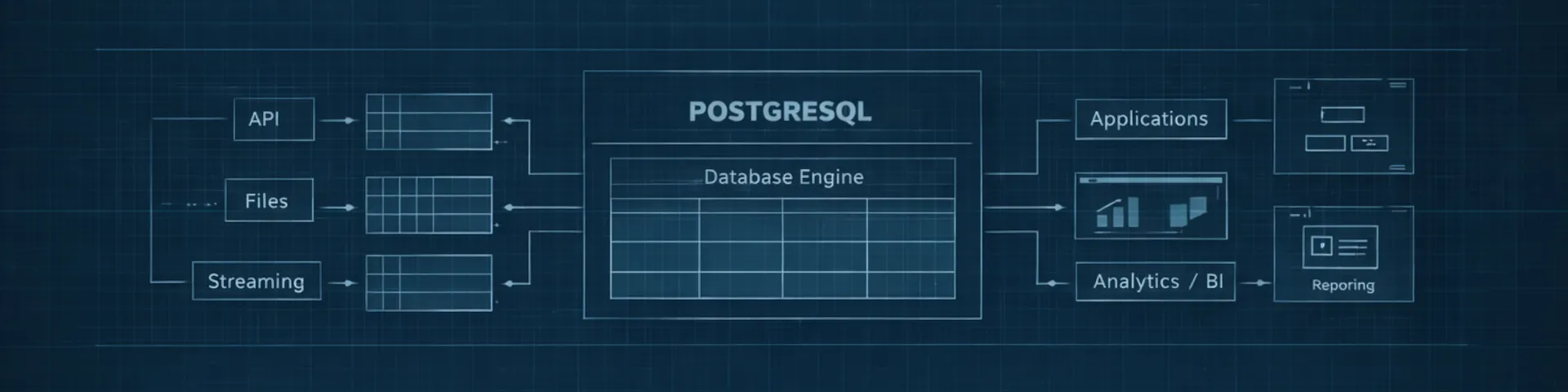
Database design and schema development form the foundation of PostgreSQL implementation, enabling business-specific data models that reflect organizational structures and workflows. The postgresql database excels at managing structured tables, complex queries, and data integrity requirements essential for reliable business operations.
Integration capabilities connect PostgreSQL with existing enterprise systems including ERP platforms, CRM solutions, and analytics tools. The database’s robust feature set includes built in support for multiple programming languages, making it compatible with diverse technology stacks across Python, Java, Node.js, and .NET environments.
This connects to business objectives through enhanced data accessibility, improved reporting capabilities, and operational automation that reduces manual processing overhead while increasing accuracy.
Strategic Business Value
Open source licensing eliminates vendor dependency and reduces total cost of ownership by 40-60% compared to proprietary database systems. Organizations avoid recurring licensing costs while gaining negotiation leverage with other technology suppliers who can no longer use database lock-in as a competitive advantage.
Building on these core components, PostgreSQL’s extensibility enables custom business logic implementation without costly third party tools. The system’s acid compliance, multiversion concurrency control, and transaction isolation levels ensure data integrity while supporting concurrent users across distributed teams.
Transition: These foundational advantages translate into measurable financial benefits and operational improvements that drive business growth.
Organizations planning a PostgreSQL migration often benefit from expert guidance. Contact us to evaluate feasibility, timelines, and ROI.
Business Impact and Financial Benefits
PostgreSQL development delivers quantifiable business outcomes through cost reduction, operational efficiency gains, and competitive advantages that directly impact bottom-line performance and strategic positioning.
Cost Reduction Opportunities and Licensing Cost
Licensing cost elimination provides immediate savings of $50,000-$500,000 annually for mid-to-large enterprises replacing Oracle or SQL Server installations. These savings compound over time as organizations avoid escalating vendor fees and maintenance costs associated with proprietary database systems.
Infrastructure efficiency reduces hardware requirements through PostgreSQL’s optimized resource utilization and query optimizer performance. The system’s ability to handle large datasets with multiple cpus enables organizations to process growing data volumes without proportional infrastructure investments.
Reduced vendor dependency strengthens negotiation positions across the entire technology stack, as suppliers can no longer leverage database lock-in to maintain pricing premiums on complementary products and services.
Operational Efficiency Gains
Scalability advantages support business growth without major infrastructure overhauls, as PostgreSQL’s architecture efficiently handles increased transaction volumes and concurrent users through multiversion concurrency control mechanisms. PostgreSQL efficiently manages simultaneous access by multiple users, ensuring smooth and conflict-free data operations.
Competitive Advantages
Advanced analytics capabilities leverage PostgreSQL’s support for geospatial data, geographic information systems, and querying geospatial data, including robust management of geographic objects, which enhances data analysis, situational awareness, and operational decision-making. These capabilities support data-driven decision making and predictive insights that drive competitive differentiation.
Rapid feature deployment becomes possible through the PostgreSQL community’s continuous innovation and the system’s extensibility for custom business requirements. Organizations can respond quickly to market opportunities without waiting for vendor development cycles or paying premium fees for feature requests.
Enhanced security and compliance capabilities through built in functions, nested transactions, and comprehensive audit trails support customer trust and regulatory requirements across industries including financial institutions and healthcare organizations.
Transition: Understanding these benefits enables informed implementation planning that maximizes ROI and minimizes deployment risks.
Implementation Strategy and Resource Planning
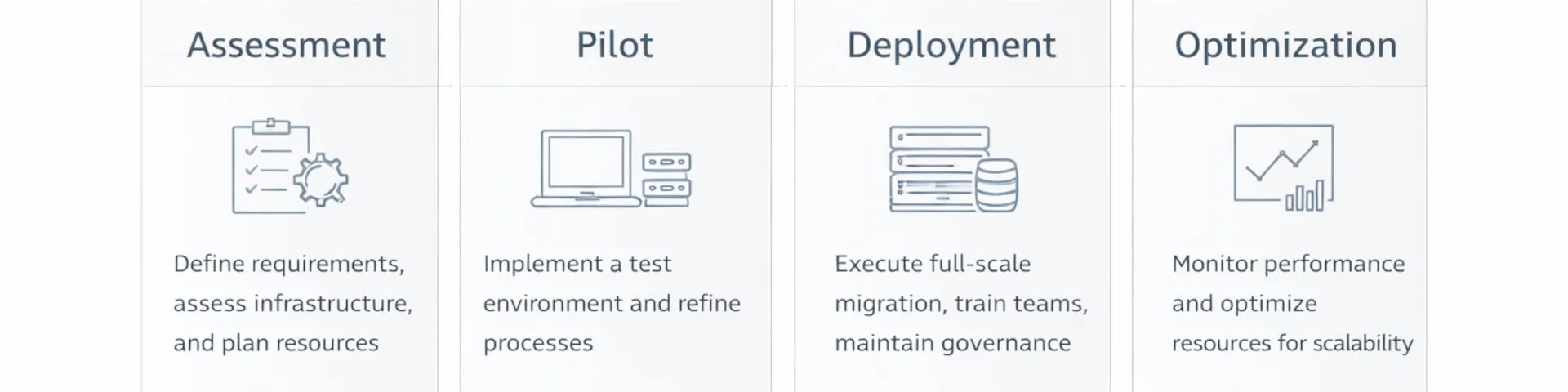
Successful PostgreSQL development requires structured implementation approaches that balance business objectives with technical requirements, team capabilities, and organizational change management considerations.
Step-by-Step Implementation Approach
When to use this: Organizations planning database modernization initiatives or new system development projects requiring reliable, cost-effective database infrastructure.
- Assessment Phase (3-6 months): Evaluate current database landscape, identify migration candidates, establish success metrics, and analyze compatibility requirements for existing applications and third party tools.
- Pilot Project (2-4 months): Select low-risk, high-value use case for proof-of-concept development, demonstrating postgresql compatibility with critical business processes and validating performance requirements.
- Team Building: Recruit PostgreSQL developers with relevant experience, provide training for existing staff on postgresql features and sql syntax, establish development standards and governance frameworks.
- Production Deployment: Migrate critical systems using comprehensive testing protocols, implement disaster recovery procedures, establish point in time recovery capabilities, and create rollback procedures for risk mitigation.
- Scaling and Optimization: Expand usage across organizational systems, implement high availability configurations including asynchronous replication, and optimize performance for specific business workloads.
Team Composition and Skills Required
Database developers with PostgreSQL expertise command average salaries of $95,000-$130,000 for senior roles, reflecting the specialized knowledge required for complex queries, stored procedures, and system optimization. These professionals manage database design, performance tuning, and application integration requirements.
System administrators familiar with operating systems including Linux environments handle database operations, backup management, and infrastructure monitoring. Their responsibilities include implementing logical replication, managing postgresql server configurations, and maintaining security protocols.
Business analysts translate organizational requirements into technical specifications, ensuring database designs align with operational workflows and reporting needs. Project managers coordinate database migration activities and system integration projects across multiple stakeholders and technical teams.
Technology Stack and High Availability Considerations
Programming language compatibility enables seamless integration across diverse development environments, with postgresql supports extending to Python, Java, Node.js, .NET, and procedural languages for custom business logic implementation.
Cloud deployment options through AWS RDS, Google Cloud SQL, Azure Database, IBM Cloud, and other platforms provide managed services that reduce operational overhead while maintaining enterprise-grade reliability and performance.
| Platform | Management Level | Cost Structure | Best For |
|---|---|---|---|
| Self-Managed | Full Control | Infrastructure Only | Custom Requirements |
| Cloud Managed | Automated Operations | Service + Infrastructure | Standard Deployments |
| Hybrid | Selective Management | Mixed Model | Compliance Requirements |
Backup and disaster recovery planning ensures business continuity through PostgreSQL’s built-in capabilities including point in time recovery, logical replication, and comprehensive data protection mechanisms.
Transition: Even well-planned implementations encounter predictable challenges that require strategic solutions.
If you're preparing for a PostgreSQL implementation or modernization effort, reach out to our team to plan next steps and resource requirements.
Cloud Deployment and Scalability
PostgreSQL delivers unmatched flexibility, enabling you to modernize your database systems through strategic cloud deployment. As a leading relational database management system, PostgreSQL seamlessly integrates with major cloud platforms—Amazon Web Services (AWS), Google Cloud, Microsoft Azure, and IBM Cloud—empowering you to scale database infrastructure that aligns with your evolving operational demands. You leverage the full benefits of cloud computing: on-demand scalability, high availability, and reduced maintenance overhead, while maintaining complete control over your data assets.
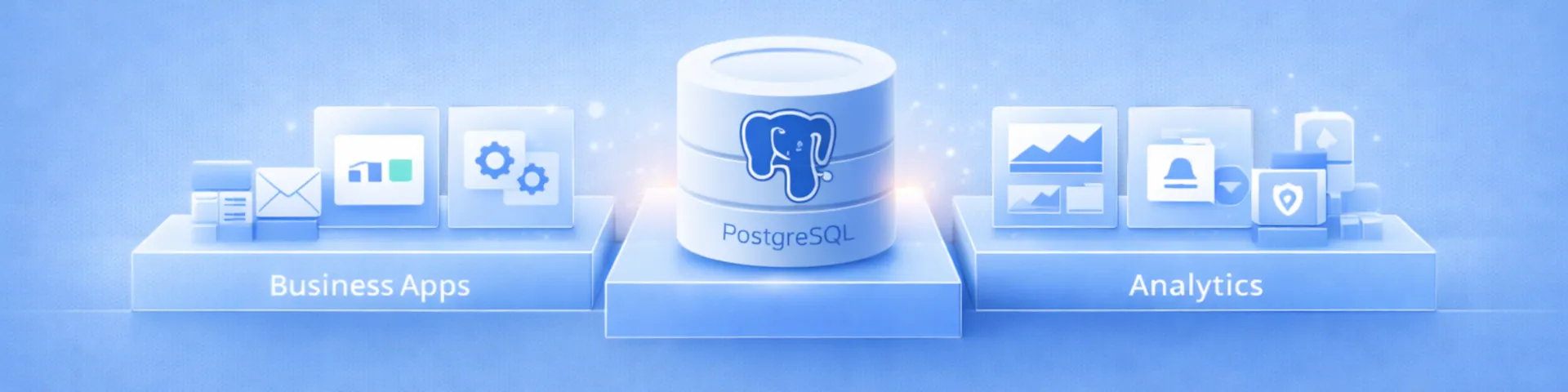
Managed cloud services like Amazon RDS and Google Cloud SQL streamline your database management by automating essential tasks such as patching, backups, and scaling. These solutions enable you to focus on strategic initiatives and application development, rather than wrestling with database administration complexities. The PostgreSQL Global Development Group continuously enhances system performance and scalability, ensuring PostgreSQL remains your top choice for mission critical applications and dynamic workloads.
PostgreSQL's robust feature set differentiates your data strategy with native support for multiple data types, advanced data types, and the ability to define custom data types. This flexibility proves particularly valuable when you're managing complex data structures or leveraging geographic information systems, as PostgreSQL supports geospatial data and advanced querying geospatial data capabilities. You perform sophisticated data analysis and location-based services directly within your database management system, unlocking new opportunities for innovation and competitive advantage.
Scalability drives PostgreSQL's architecture, engineered to handle large datasets and thousands of concurrent users. You achieve ideal performance for high-traffic web applications, financial institutions, and data warehousing solutions. Features such as multi version concurrency control (MVCC) ensure consistent performance and data integrity, even as your transaction volumes grow. High availability supports your operations through asynchronous replication, logical replication, and point in time recovery, providing robust disaster recovery options and minimizing data loss risks.
PostgreSQL's compatibility with a wide range of operating systems—Windows, Linux, and macOS—ensures you deploy database systems in virtually any environment. The permissive open source license and active PostgreSQL community provide additional assurance of long-term support and innovation, without vendor lock-in constraints. As a source object relational database, PostgreSQL offers native support for complex data types such as arrays and JSON, enabling you to build modern, data-rich applications with ease.
PostgreSQL stands out for its combination of advanced features, scalability, and reliability compared to other databases. You leverage existing SQL syntax and procedural languages for custom business logic and automation, as the system conforms to the SQL standard. Built in functions, stored procedures, and custom functions enhance your ability to tailor the database to specific business needs. Whether you're supporting dynamic websites, large-scale data analysis, or mission critical applications, PostgreSQL delivers a high availability, high performance solution that grows with your business.
PostgreSQL's cloud deployment options and scalability features make it a strategic asset when you're seeking a robust, future-proof relational database management system. By harnessing PostgreSQL's advanced capabilities, you ensure data integrity, operational resilience, and the agility needed to thrive in today's competitive landscape.
Common Challenges and Business Solutions
Business leaders frequently encounter obstacles during PostgreSQL development initiatives that can derail projects or limit ROI realization without proper preparation and response strategies.
Challenge 1: Internal Resistance to Open Source Technology
Solution: Develop comprehensive business cases highlighting enterprise adoption by companies like Instagram, Spotify, and Reddit, demonstrating proven reliability and extensive support ecosystems within the postgresql community.
Present total cost of ownership analyses comparing 5-year expenses against current database systems, including licensing costs, maintenance fees, and infrastructure requirements. Emphasize postgresql license advantages and vendor independence benefits.
Challenge 2: Skills Gap and Training Requirements
Solution: Partner with specialized consulting firms for initial implementation while building internal capabilities through targeted training programs focused on postgresql features, database management, and integration techniques.
Budget 15-20% of project costs for training and knowledge transfer activities, ensuring sustainable long-term operations and reducing dependency on external resources for routine maintenance and enhancements.
Challenge 3: Integration with Legacy Systems
Solution: Implement phased migration approaches using PostgreSQL’s foreign data wrappers to maintain connectivity during transition periods, minimizing disruption to ongoing business operations.
Establish clear data governance policies and integration testing protocols that validate data integrity, performance requirements, and operational continuity throughout migration processes.
Transition: These solutions enable successful PostgreSQL implementations that deliver sustained business value.
Conclusion and Next Steps
PostgreSQL development represents a strategic business investment delivering measurable cost savings, operational improvements, and competitive advantages through open source database technology that eliminates vendor lock-in while providing enterprise-grade capabilities for mission critical applications.
To get started:
- Conduct database landscape assessment: Identify current systems, licensing costs, and migration candidates for PostgreSQL evaluation
- Evaluate internal capabilities: Assess team skills, training requirements, and resource availability for successful implementation
- Develop comprehensive business case: Create ROI projections, implementation timelines, and risk mitigation strategies for stakeholder approval
Related Topics: Cloud migration strategy, data governance frameworks, and business intelligence platform selection provide complementary considerations for comprehensive data infrastructure modernization initiatives.
Additional Resources
PostgreSQL Community Resources:
- Official PostgreSQL documentation and feature guides
- Enterprise support providers and consulting services
- Training programs and certification pathways for technical teams
Business Planning Tools:
- TCO calculators comparing PostgreSQL to proprietary alternatives
- Migration assessment frameworks and timeline templates
- ROI measurement methodologies for database modernization projects
These technologies are often implemented together as part of a broader data platform strategy. If you're evaluating how PostgreSQL fits into your environment, contact us to discuss your requirements.
Other Solutions and Technologies MOST Can Help You With:
You can see our full technology stack here.
Learn about our SQL server services here.
Check out our MySQL solutions as well
We can help with AWS services and solutions
Our Amazon Redshift Use Cases explained here
If you're ready to move forward with PostgreSQL development or migration, contact us to design a database strategy aligned with your business goals.
FAQs related to PostgreSQL services
What PostgreSQL services does MOST Programming provide?
MOST Programming provides PostgreSQL database architecture and design, PostgreSQL development, PostgreSQL performance tuning, PostgreSQL migrations and upgrades, high availability and replication setup, security hardening, and ongoing PostgreSQL managed support.
What is PostgreSQL used for in modern applications?
PostgreSQL is used as a relational database for transactional systems, analytics workloads, APIs, and data-driven applications. It supports structured and semi-structured data, complex queries, and high-concurrency workloads in production environments.
Why do organizations choose PostgreSQL over other databases?
Organizations choose PostgreSQL for its open-source licensing, strong ACID compliance, standards-compliant SQL support, extensibility, advanced indexing options, and ability to handle both transactional and analytical workloads reliably.
Can MOST migrate existing databases to PostgreSQL?
Yes. MOST Programming migrates databases to PostgreSQL from platforms such as SQL Server, Oracle, MySQL, and other relational systems, handling schema conversion, data migration, validation, and production cutover planning.
How does MOST improve PostgreSQL performance?
MOST improves PostgreSQL performance by analyzing query execution plans, optimizing indexes, tuning configuration parameters, implementing partitioning where appropriate, and aligning database design with workload patterns.
How does PostgreSQL handle data integrity and transactions?
PostgreSQL ensures data integrity through full ACID compliance, multiversion concurrency control, transaction isolation levels, write-ahead logging, and robust recovery mechanisms that protect data consistency and durability.
Does PostgreSQL support high availability and replication?
Yes. PostgreSQL supports built-in replication using streaming replication, synchronous and asynchronous replicas, read scaling, and failover architectures to support high availability and fault tolerance.
How does MOST secure PostgreSQL databases?
MOST secures PostgreSQL databases by configuring role-based access control, encrypted connections, authentication mechanisms, audit logging, and network-level protections aligned with security and compliance requirements.
Can PostgreSQL be used for analytics and reporting?
Yes. PostgreSQL is commonly used for analytics and reporting workloads due to its advanced SQL capabilities, indexing options, support for large datasets, and compatibility with business intelligence and reporting tools.
Does MOST support PostgreSQL in cloud environments?
Yes. MOST supports PostgreSQL deployments in cloud and hybrid environments, including managed PostgreSQL services, virtual machine-based deployments, and containerized PostgreSQL architectures.
How does PostgreSQL compare to SQL Server?
PostgreSQL is an open-source database with broad extensibility and cross-platform support, while SQL Server is a proprietary database tightly integrated with the Microsoft ecosystem. Both are enterprise-grade, and the right choice depends on architecture, licensing, and workload needs.
What is MOST’s PostgreSQL implementation process?
MOST follows a structured PostgreSQL implementation process that includes discovery, data modeling, architecture design, environment setup, development, performance tuning, testing, deployment, and optional ongoing support.
How can I get a PostgreSQL consultation or project estimate?
A PostgreSQL consultation or project estimate begins by reviewing data architecture goals, workload requirements, performance expectations, security needs, and integration considerations to define the appropriate engagement scope.